Mohit Kataria Mohit Kataria

Hi, I am Mohit (मोहित)

Ph.D. Scholar

School of Artificial Intelligence

Indian Institute of Technology, Delhi

I am a Ph.D. candidate at Yardi-School of Artificial Intelligence, IIT Delhi, advised by Dr. Sandeep Kumar and Dr. Jayadeva. My research focuses on improving the scalability of graph machine learning techniques, with contributions spanning graph neural networks (GNNs), graph transformers, graph coarsening, graph structure learning, and their applications in biomedical and neuroscience domains. My work covers diverse graph modalities, including large-scale, streaming, and dynamically expanding graphs, as well as homogeneous/heterogeneous and homophilic/heterophilic structures. Alongside, I have explored large language models (LLMs) and their integration with graph-based learning. Broadly, I am interested in the intersection of graphs, LLMs, federated learning, and privacy, and applications of graphs in neuroscience.
I am currently looking for postdoctoral opportunities.
Recent Updates

  • Aug 2020, Started Ph.D.
  • FACH got accepted at NeurIPS 2023 Workshop: GLFrontiers
  • UGC got accepted at NeurIPS'24
  • Recieved Google Travel Grant
  • coar-scRNA got accepted at CBME.
  • UGC won best poster award for LOG: New Delhi Meet-up.
  • Joined Abode Research for Summer Intership
  • Visited Imperial College London for "LoGML summer school."
  • Recieved travel grant from LoGML and ANRF.

Publications

Published Papers

  • UGC: Universal Graph Coarsening accepted at NeurIPS' 24. link
  • FACH: Linear Complexity Framework for Feature-Aware Graph Coarsening via Hashing. NeurIPS 2023 Workshop: New Frontiers in Graph Learning. link
  • HistoGraphCoarse: Strategizing Graph Coarsening Techniques for Efficient Analysis of Gigapixel Histopathological Images. MICAAI 2024 Workshop: GRaphs in biomedicAl Image anaLysis. link
  • coar-scRNA: Scaling Graph-Based Approaches for Large-Scale Single-Cell Data Analysis Using Coarsened Graph Learning accepted at Computers in Biology and Medicine. link

Under Review

  • Extension of UGC: Universal Graph Coarsening Submitted at T-PAMI.
  • GraphFLEx: Structure Learning Framework for Large Expanding Graphs submitted at NeurIPS'25.
  • Ah-UGC: Adaptive and Heterogenous Universal Graph Coarsening submitted at NeurIPS'25.
  • SENSE: SENsing Similarity SEeing Structure submitted at NeurIPS'25.

Research Projects

Scaling Graph Learning

UGC: Universal Graph Coarsening

In the era of big data, graphs have emerged as a natural representation of intricate relationships. However, graph sizes often become unwieldy, leading to storage, computation, and analysis challenges. We propose Universal Graph Coarsening (UGC), a framework equally suitable for homophilic and heterophilic datasets. UGC integrates node attributes and adjacency information, leveraging the dataset's heterophily factor. Results demonstrate that UGC preserves spectral similarity while coarsening. In comparison to existing methods, UGC is 4× to 15× faster, has lower eigen-error, and yields superior performance on downstream processing tasks even at 70% coarsening ratios.¹

GraphFLEx: Structure Learning Framework for Large Expanding Graphs

Graph structure learning is a core problem in graph-based machine learning, essential for uncovering latent relationships and ensuring model interpretability. However, most existing approaches are ill-suited for large-scale and dynamically evolving graphs. We propose GraphFLEx—a unified and scalable framework for Graph Structure Learning in Large and Expanding Graphs. GraphFLEx mitigates scalability bottlenecks by restricting edge formation to structurally relevant subsets of nodes identified through clustering and coarsening techniques. The framework supports 48 flexible configurations and achieves state-of-the-art performance with significantly improved scalability across 26 diverse datasets.

Ah-UGC: Adaptive and Heterogenous Universal Graph Coarsening

Graph Coarsening (GC) is a prominent graph reduction technique that compresses large graphs to enable efficient learning and inference. However, existing GC methods generate only one coarsened graph per run and must recompute from scratch for each new coarsening ratio. We introduce a novel framework that combines Locality-Sensitive Hashing (LSH) with Consistent Hashing to enable adaptive graph coarsening. For heterogeneous graphs, we propose a type-isolated coarsening strategy that ensures semantic consistency. Our approach is the first unified framework to support both adaptive and heterogeneous coarsening, achieving superior scalability across 23 real-world datasets.

Applications

coar-scRNA: Scaling Graph-Based Approaches for Large-Scale Single-Cell Data Analysis

The emergence of single-cell technologies has revolutionized the study of cellular heterogeneity, generating vast datasets rich in biological insights. However, managing large-scale graph representations of single-cell data remains computationally challenging. We propose a novel approach that utilizes our established coarsening algorithm, integrating locality-sensitive hashing (LSH) to expedite processing without compromising critical data features. This method directly extracts informative, low-dimensional cell representations from raw single-cell RNA sequencing and mass cytometry data, significantly improving processing speed while preserving essential data features. Our method's efficiency, precision, and adaptability represent significant advancements in large-scale single-cell analysis.

Privacy and Federated Learning

SENSE: SENsing Similarity SEeing Structure

SENSE Project

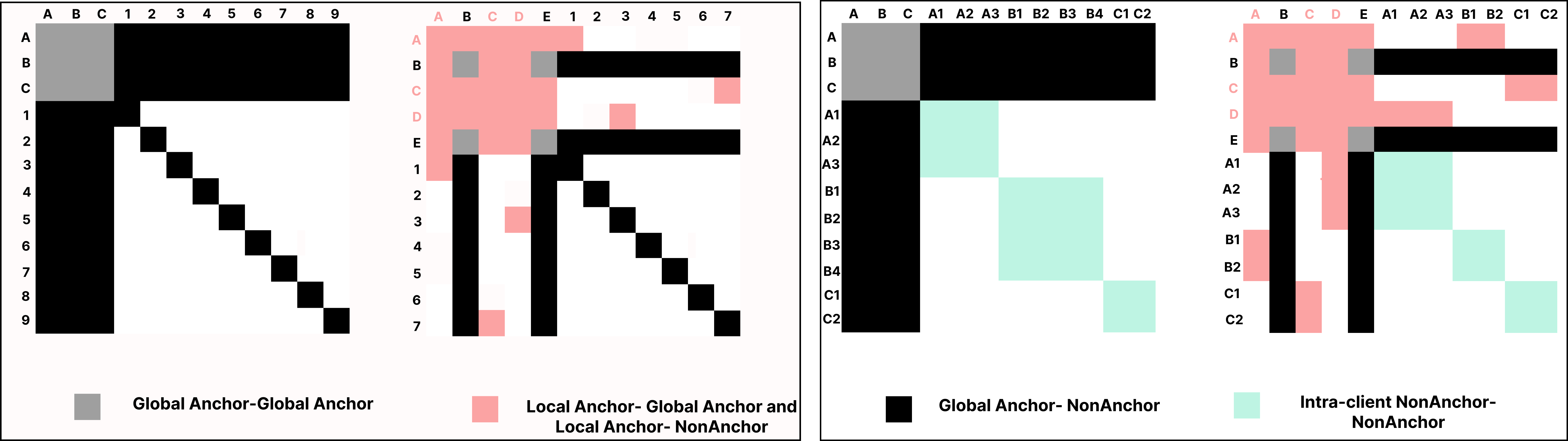
Low-dimensional embeddings are central to analyzing and visualizing high-dimensional data. However, widely adopted NE methods assume centralized access to all data, an unrealistic constraint in privacy-sensitive, decentralized environments. We propose SENSE, a geometry-aware, privacy-preserving framework for global neighbor embedding without raw data exchange. SENSE reconstructs global structure using local distance measurements and structured matrix completion, enabling embeddings that preserve both local and global geometry in Euclidean and hyperbolic spaces. It further integrates contrastive learning by deriving cross-client positive and negative pairs from estimated similarities, effectively generalizing negative sampling under structural constraints. Experiments across diverse real-world datasets show that SENSE achieves embedding quality on par with centralized baselines, while offering strong privacy guarantees. Theoretical analysis provides formal bounds on reconstruction fidelity and privacy, establishing conditions under which structure and confidentiality are jointly preserved.

pFedGNN: Personalized Federated Learning on Graphs

pFedGNN Project

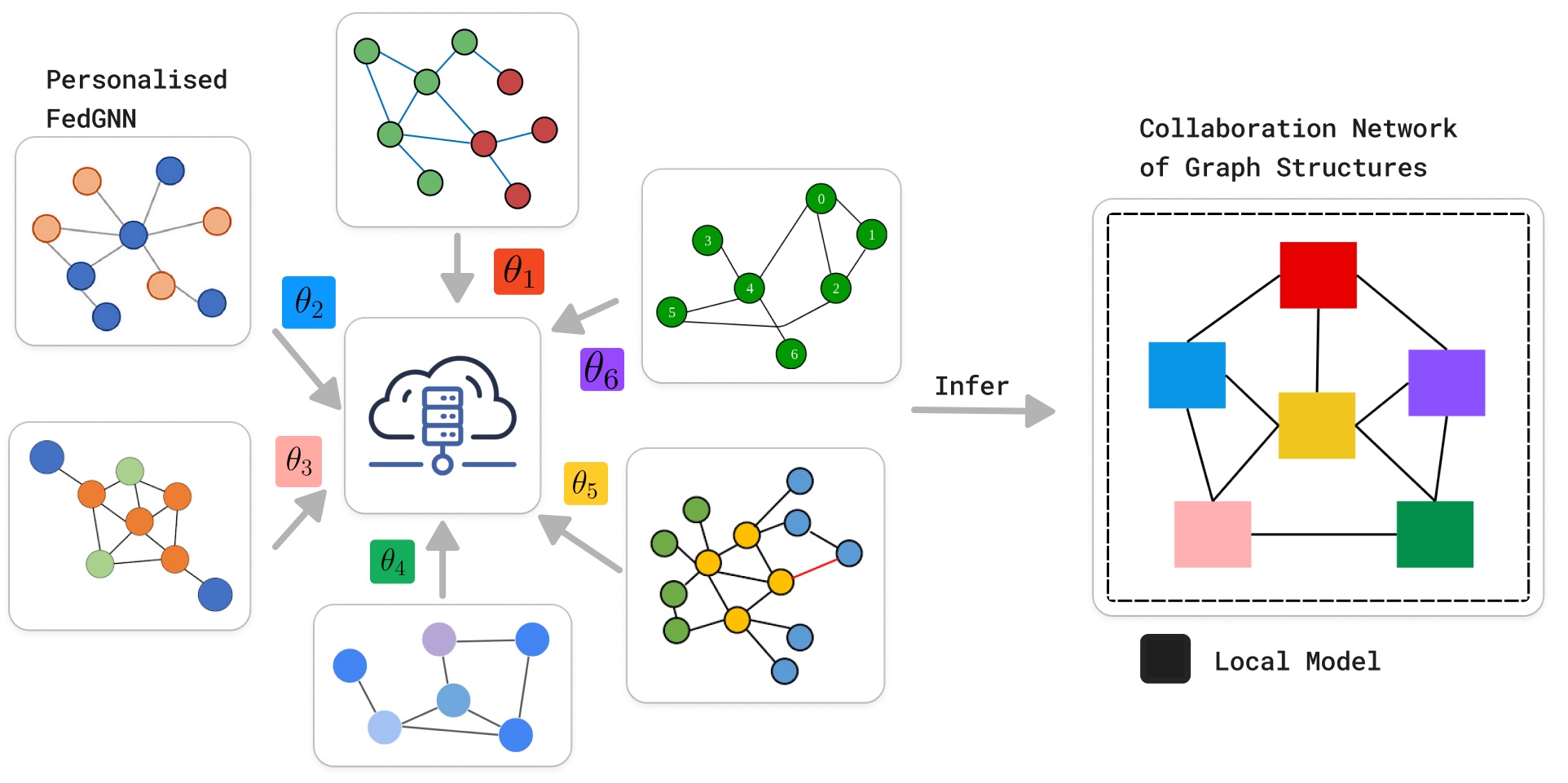
Federated graph learning has emerged as a significant approach for training graph machine learning models across various domains. However, graphs often exhibit non-IID properties in both structure and node features. We propose pFedGNN, a personalized federated graph-based learning approach that utilizes inferred collaboration graphs. The core idea is to model collaboration benefits between clients by inferring a collaboration graph based on pairwise GNN model similarity and graph dataset size. This approach gives significant improvement on GNN node classification as it encourages collaboration primarily among similar and beneficial clients.

Teaching Experience

IIT Delhi Teaching Assistant

  • TA 2024/2023 ELL784: Introduction to Machine Learning
  • TA 2024 COL775: Deep Learning
  • TA 2023 AIL701: Mathematical Foundation for Machine Learning
  • TA 2022 ELL780: Mathematical Foundations
  • TA 2022 ELL888: Advance Graph Machine Learning

Industry Outreach Programs

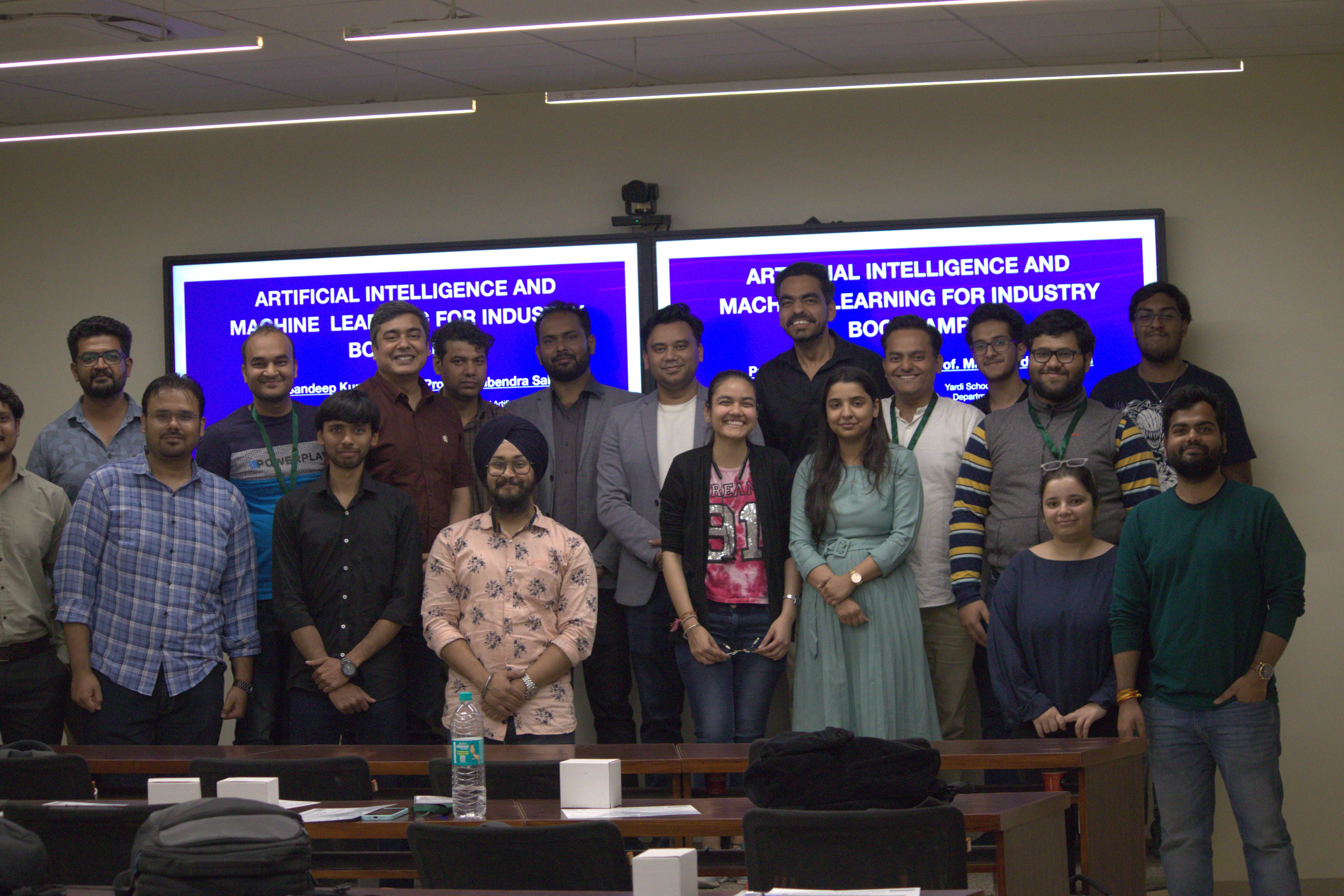
  • Conducted 3 Days of Bootcamp session in AI/ML for 25 industry professionals at IIT Delhi 2024.
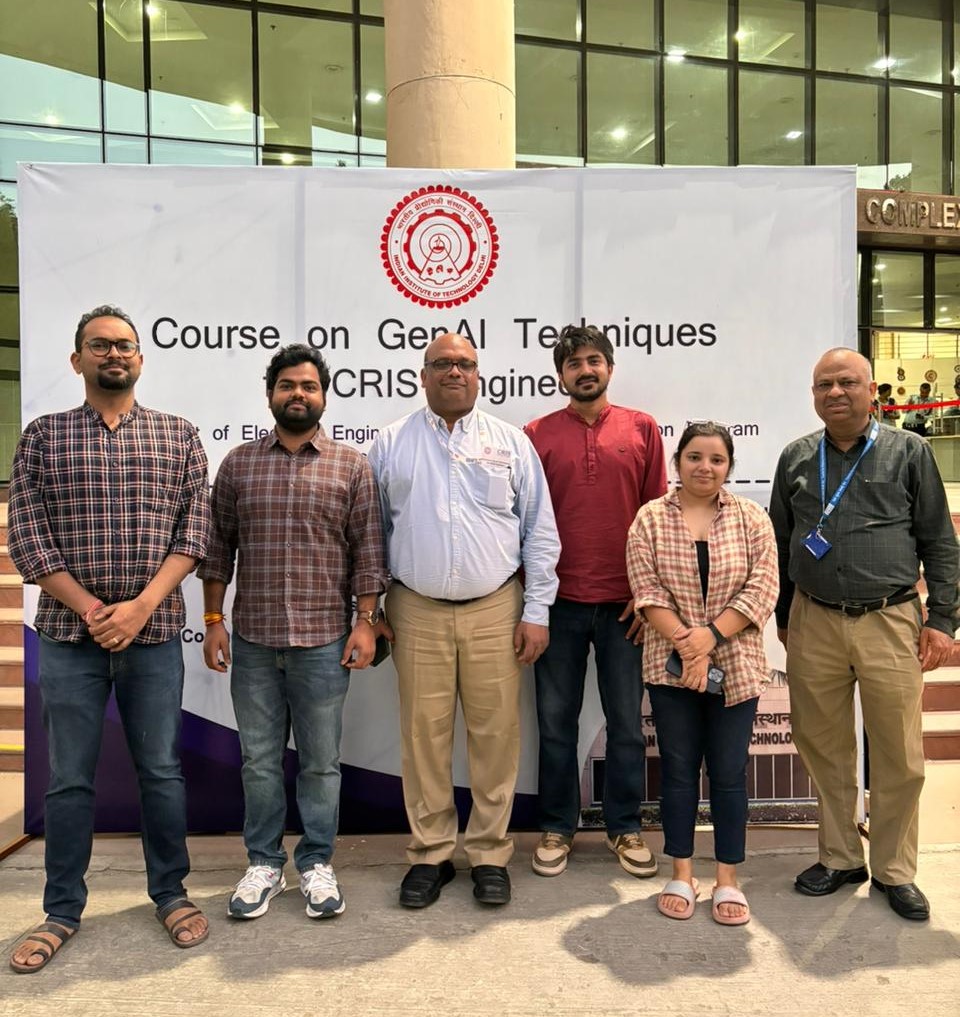
  • Conducted a training session in Gen AI Techniques for CRIS Engineers at IIT Delhi 2024.
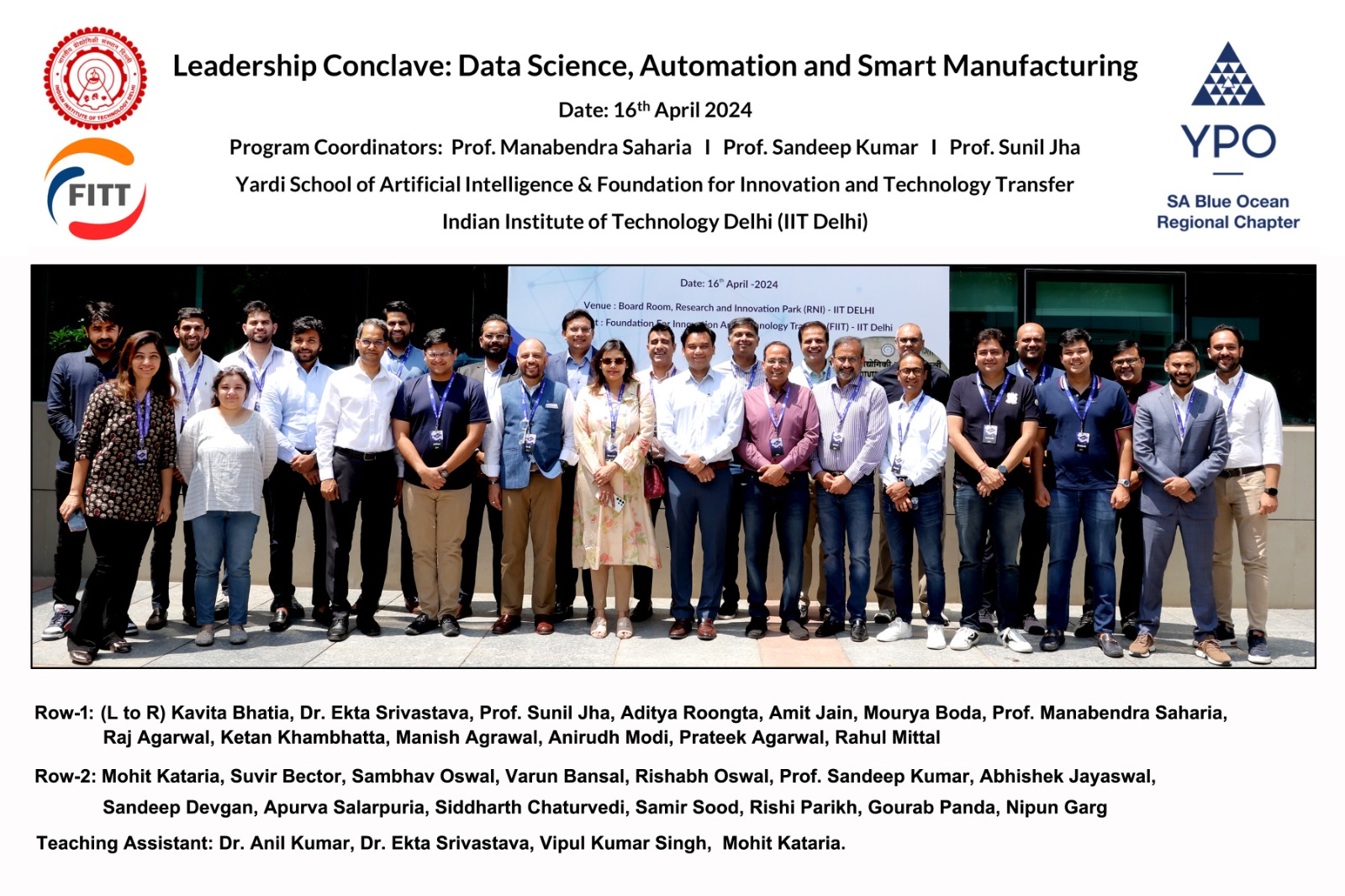
  • Conducted a Leadership Conclave on Data Science, Automation, and Smart Manufacturing for YPO members at IIT Delhi 2024.
  • Coordinated and taught a 5-month course for Industry Professionals through the CEP program, AI/ML for Industry Batch 1, 60 participants completed the course and received the certificates, in 2023.
  • Coordinated and taught a 5-month course for Industry Professionals through the CEP program, AI/ML for Industry Batch 2, 80 participants completed the course and received the certificates, in 2024.
  • Coordinated and taught a 5-month course for Industry Professionals through the CEP program, AI/ML for Industry Batch 3, 80 participants, currently ongoing.
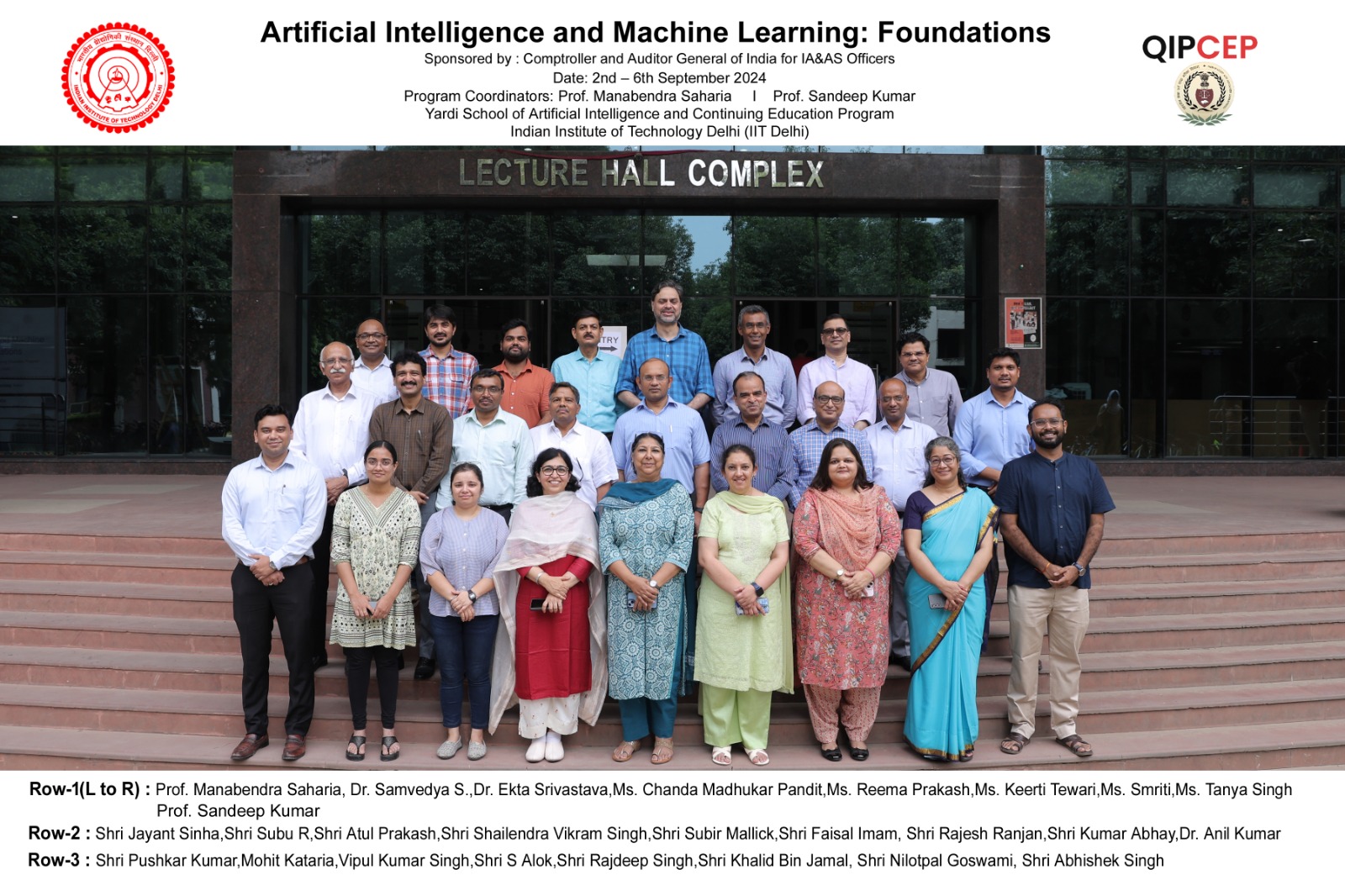
  • Five-Day Programme for CAG/IAAS Officers "CAG AI/ML training."
  • Conducted training sessions for Higher secondary school students from Abu Dhabi in the basics of AI/ML "Future Changemakers: Winter Bootcamp" at IIT Delhi 2023.
  • Conducted 9 hours of training sessions in AI/ML for 200 students of Delhi Skills and Entrepreneurship University, in 2022.

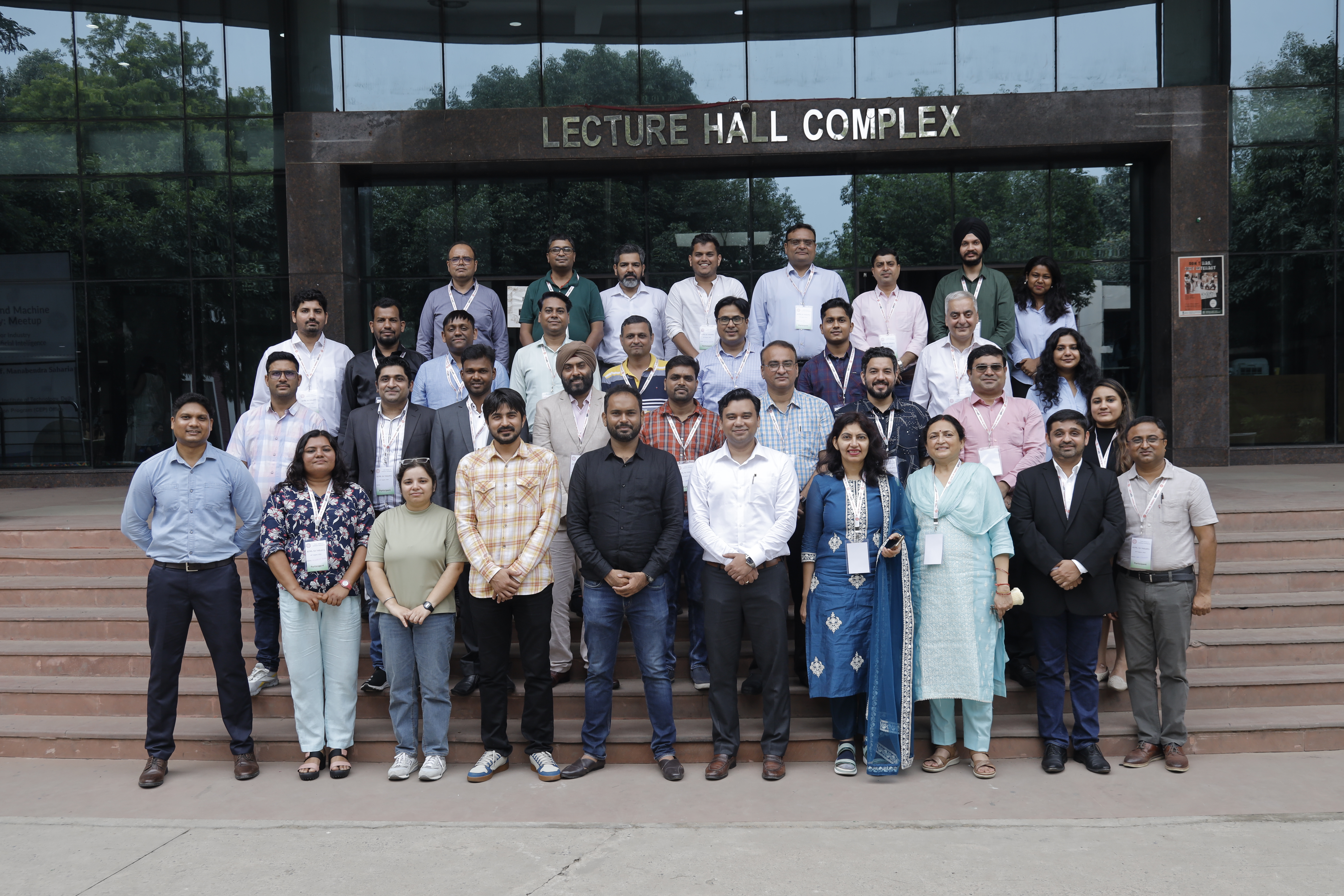
Industry Outreach Gallery

Curriculum Vitae

You can download my full CV here: Download CV.

Career Overview

  • Ph.D. in Graph ML, IIT-Delhi, India, 2021 - Present
  • Published Author of several academic papers
  • Adobe Summer Intern in 2025.
  • Backend Developer with 2 years of Experience in Erlang at Octro.Inc.

Education

  • Ph.D. in Graph Machine Learning - IIT Delhi (2021-Present)
  • Master's Degree - 2020
  • Bachelor's in Computer Science - Delhi University (2017)

Research Interests

  • Graph Machine Learning
  • Graph Neural Networks
  • Graph Coarsening
  • Scalable Graph Algorithms
  • Federated Learning on Graphs
  • Graph Transformers
  • Graph Applications.
  • Large Language Models (LLMs)

Contact Information

Location

School of Artificial Intelligence
Indian Institute of Technology, Delhi
New Delhi, India

Want to discuss some potential projects?

Let's collaborate!

Other Interests

Badminton, Cricket, Swimming, Drawing

Must read poem

Click the link above to open the poem image in a new tab

Social & Professional Links

Professional Experience

Research Experience

Ph.D. Research Scholar

2021 - Present

School of Artificial Intelligence, IIT Delhi

Conducting research on scalable graph machine learning techniques, focusing on graph coarsening, graph structure learning, and federated learning on graphs. Advised by Dr. Sandeep Kumar and Dr. Jayadeva.

Industry Experience

Adobe Research Summer Intern

May 2025 - Aug 2025

Abobe

Worked on document consistency checking using LLMs.

Backend Developer

2019 - 2021

Octro.Inc.

Worked as Backend Developer for 2 years, using Erlang.

Teaching & Outreach Experience

Teaching Assistant

2022 - 2024

IIT Delhi

Teaching assistant for multiple courses including Machine Learning, Deep Learning, and Graph Machine Learning.

Industry Training Coordinator

2022 - 2024

IIT Delhi CEP Program

Coordinated and taught in multiple 5-month AI/ML courses for industry professionals, reaching over 300 participants.