Project Proposal
Person counter and display device - Ritika C. & Sannat M.
Motivation
Lots of people travel daily in Delhi metro. However, it is seen that the journey in metro is not very comfortable, especially during the office hours. This is because of the immense rush on the metro lines at this hour of the day. This rush is also the reason that many female passengers do not find travelling by metro appropriate. As such, we can keep a track of the people inside a coach and to indicate it accordingly on the next metro stations so that people can distribute in queues in front of coaches. This shall relent the people from entering the coaches already fully occupied. There is no such mechanism presently and hence no one even bothers to see that the compartment is already too occupied. We found this problem a genuine one. However, we understand that the entire project cannot be implemented at once in the metros nor can it be used for testing at such a large scale. Hence, we have planned to test and implement our idea at a smaller scale at the institute level. Henceforth, we plan to give the proof of our concept at this very scale. How we plan to do the project is described in detail below.
Introduction
We have planned to implement the project to count the number of students in a lecture hall to obtain an accurate toll of students attending a class. Accordingly, we can display the number of students either on a screen in the lecture hall or it can be directly sent to the concerned professor for further action. This can be a very useful tactic to check if there have been some defaulters or not. This shall not only prove our concept but also turn out to be a useful tool in the future. Since, this is a small scale real time testing at institute level we have planned to lay down the schematics and implementation keeping in mind the classroom at IIT Delhi. However, the basic technology remains the same in large scale batch testing at large gatherings. Using the same project we can also achieve the following-
- Retail store conversion rates- Using population counters, identification of user patterns in retail stores can be mapped.
- Traffic monitoring- Real time automated traffic monitoring in roads and highways.
- Marketing effectiveness- Shopping mall marketing professionals rely on visitor statistics to measure the effectiveness of the current marketing campaign.
- Staff Planning- Retailers can use the different business metrics in order to determine their staffing allocation.
Project Components
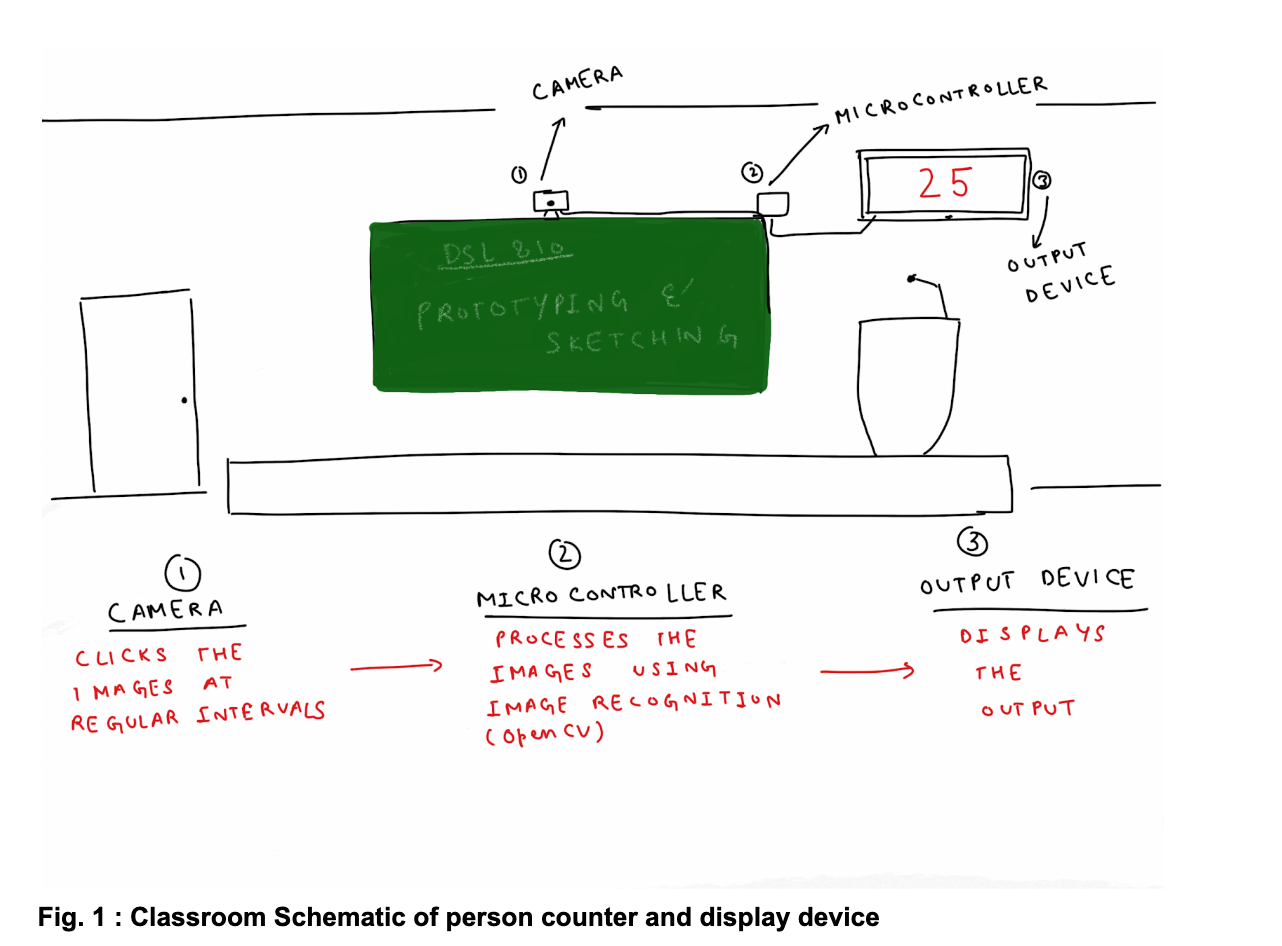
- OpenCV Module: Herein, we have planned to use OpenCV library for image processing and person detection, including multiple person detection. We also plan to implement this in images as well as videos. OpenCV is an open source project, hence, there are already online repositories concerning feature detection and pedestrian detection. We can use them as such in our codes and implement them.
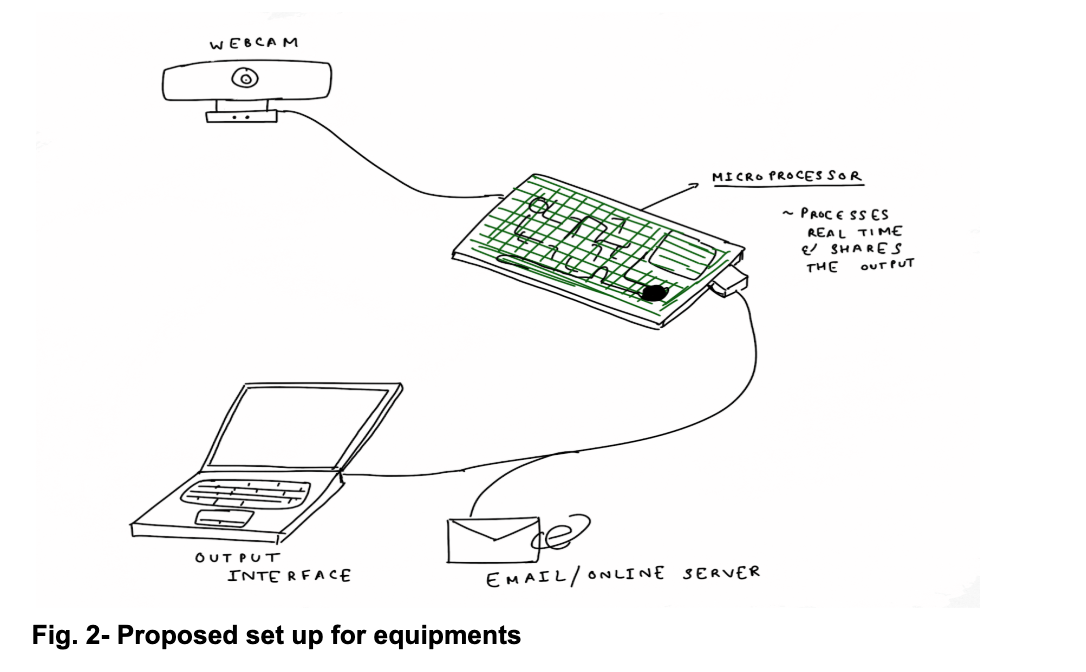
- Microprocessor Module: Presently, we have decided to use to camera modules to be put up at the top of the balck/white boards and configured with a predetermined field of view. The camera module would send the images/videos to microprocessor module. The images/videos would be processed using openCV module embedded in microprocessor memory.Initially, we plan to use Arduino microprocessor, but in case the image processing and setup is easy with another board, we wish to switch to BeagleBone, for its low cost in comparison to features and compliance with the project.
- Camera: We plan to use a standard HD web camera which can be mounted on wall easily and connects with microprocessor board.
Required Components and Skills
- Microprocessor module
- HD Webcam
- OpenCV
- Resistors and connecting wires
- Fabrication for setup
Distribution
- Phase-I-In first phase we plan to click random photographs and videos using a normal mobile phone camera ,then asses those images in the OpenCV. The first task is to take results out of those assessments and figure out various parameters such as field of view outside or inside the door, the frequency of detection of images and person detection, especially multiple people detection.
- Phase-II-In the second phase, we plan to implement camera module that is controlled by the Arduino microprocessor, link it to OpenCV and setting the proper hardware correctly on the wall so that the set up hardware is mounted properly.
- Phase-III-In the third phase, we shall be working on the positioning and field of view of the camera finally. We shall be working on how the camera can be used optimally for people detection, especially for the correct working of our algorithm.
- Phase-IV-The fourth phase shall be the one wherein we shall be displaying our count on some display. Preferably, this display shall be an LED display. This phase shall act as a checkpoint for the previous phases and shall test how we have fared in the earlier phases.
Suspected Challenges
- Accuracy of image detection and processing cannot be 100% true in all situations.
- Placement of camera module and height dependent on classroom/room chosen. Also, lighting issues also may be present.
References