
Minor 2 : PPEs for rural and low-income communities
Co-creator-Ritika Chaplot
Introduction
We have worked on a i4 challenges posted by IIT Delhi- PPEs for rural and low-income communities. Problem statement- "* India, as elsewhere, disposable PPE is in short supply and health care facilities must be prioritized. It will be especially difficult for rural and low-income families caring for ill and community health workers providing direct care or assistance to those infected with COVID-19 to access high-quality PPE. GoI recommends that a double-layer cotton cloth can be used in the absence of a disposable mask.Innovation to support PPE for rural and low-income communities is required. Solution should be low cost, environmentally friendly and easy methods of production/distribution....." Aim of this challenge is to design PPEs for rural and low income communities as they are at large risk due to high population density, poor hygienic conditions and low income. We start with characterization of Covid-19 and available PPE kits to broaden the horizon for design and understanding standards. After evaluation of the status quo, needs and requirements of equipment are listed to propose suitable designs for the target community. Finally, we look into design, production methods and testing of PPEs proposed.
Characterisation of PPE kits
PPE works as a barrier between an individual’s skin, mouth, nose, or eyes and viral and bacterial infections. In the context of COVID-19—which is spread primarily between people through close contact and droplets, not by airborne transmission—PPE includes the following, but can vary between medical professionals, hospital cleaners, and patient visitors [1]. Here are prime utility factors of various PPE components.
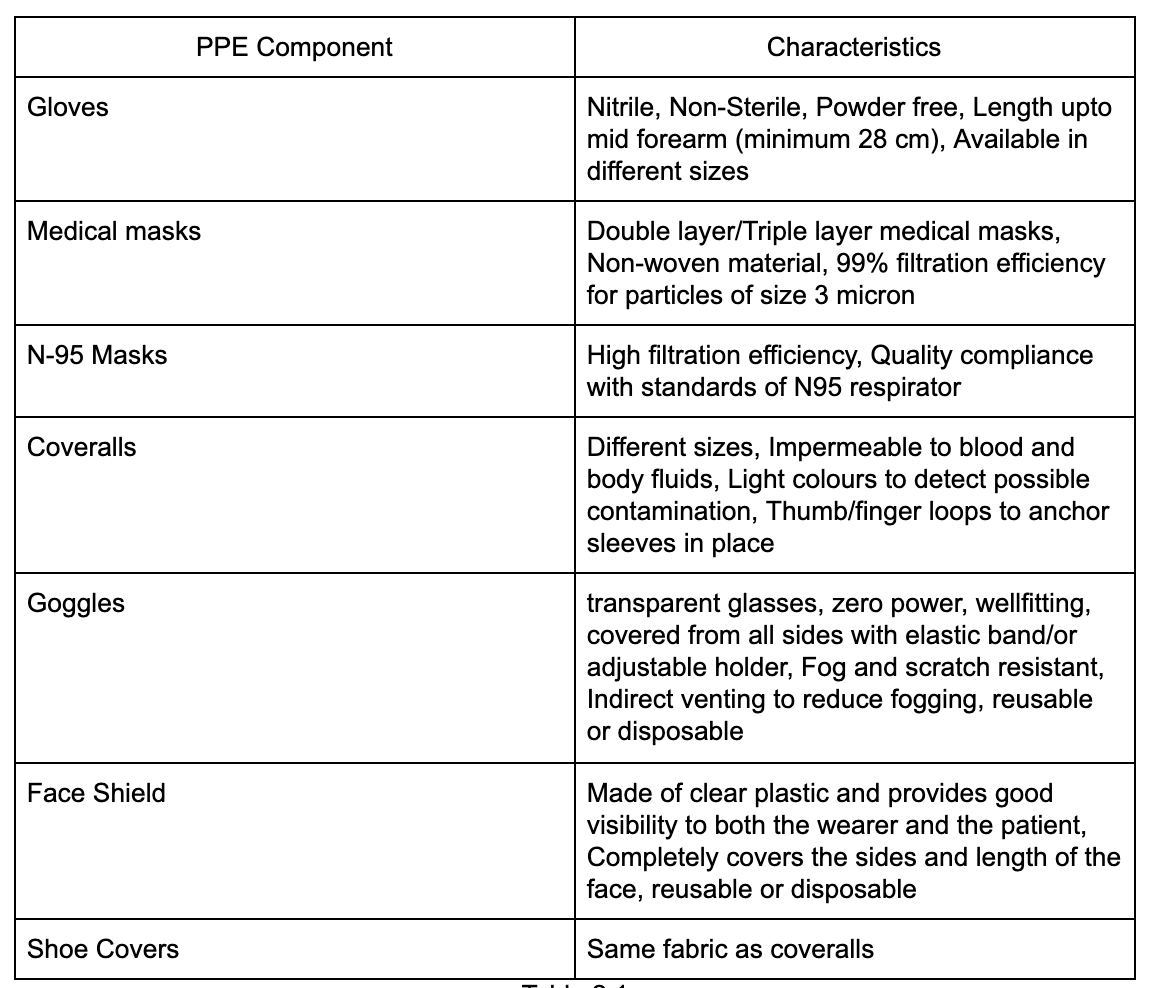 In summary most of PPE kits have certain standards and utility that can also be replicated to an optimal extent by alternate materials.
Status quo
India majorly consists of rural population and in urban areas there are a lot of low income communities living in urban slums or poor conditions. The non-rural low-income communities are living in densely packed areas with poor levels of hygiene and high risk of catching infection. Thus, the solution has to be compliant and feasible with these non-rural low income communities. Rural populations can also be targeted with similar PPE solutions. Chart below signifies different layers of risk index as defined by Ministry of Health and Family Welfare Guidelines on rational use of PPE [1]
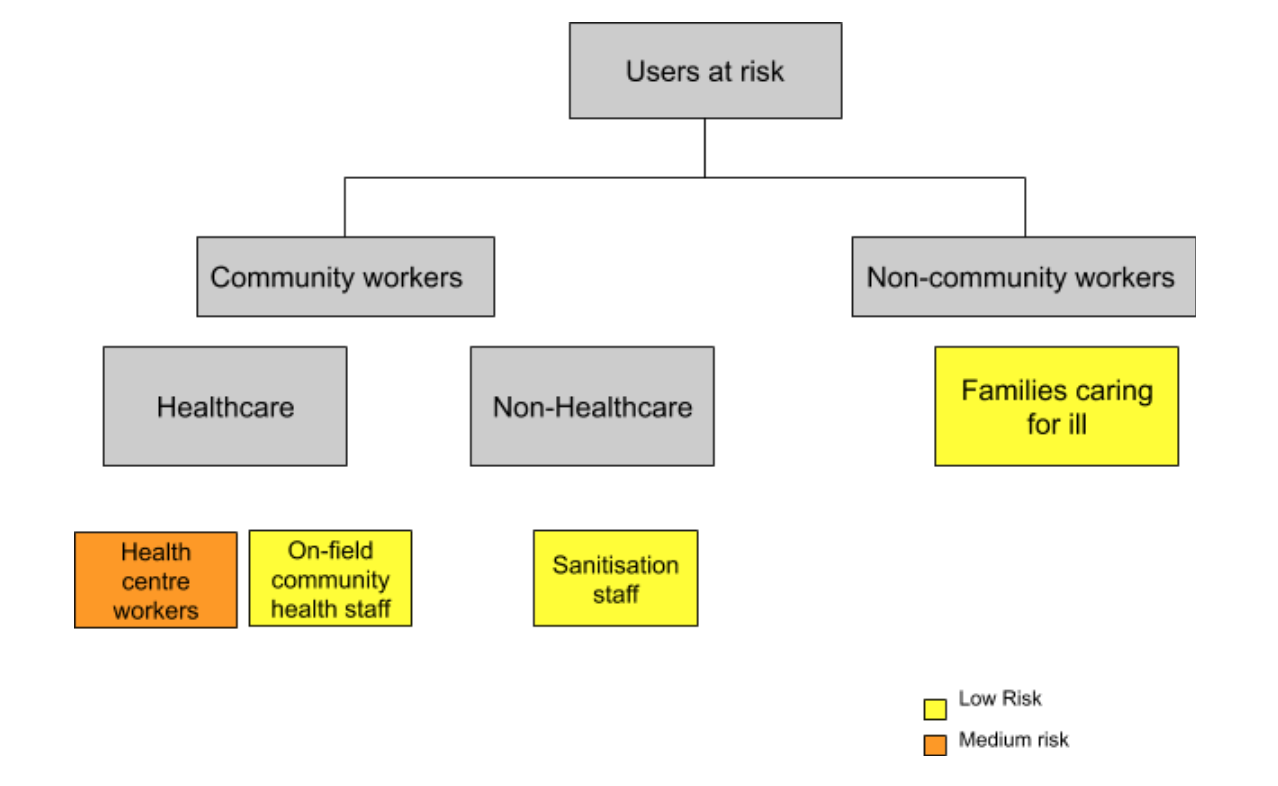 According to status quo, we need to design PPE component which serves the following-
- Effective but low cost
- Doctors, primary health case workers, anganwadi's and sanitation workers are at relatively high risk in community. Hence, they need the highest level of protection
- Apart from community level, jobs served by these communities are either seasonal employment or daily wage labourers or small scale businesses. Their contact is frequent with a lot of people and hence, they can be carriers as well at a large scale in these communities.
- Easily reproducible equipments
- Coveralls and other body wearables
- Respiratory protection
- Ease of manufacturing
- Low material cost and maintainence
- Utility offered
- Plastic bottles (1lt. and above preferably)
- Protection membrane
- Duct pipes
- Cutting equipment
- Nuts and bolts
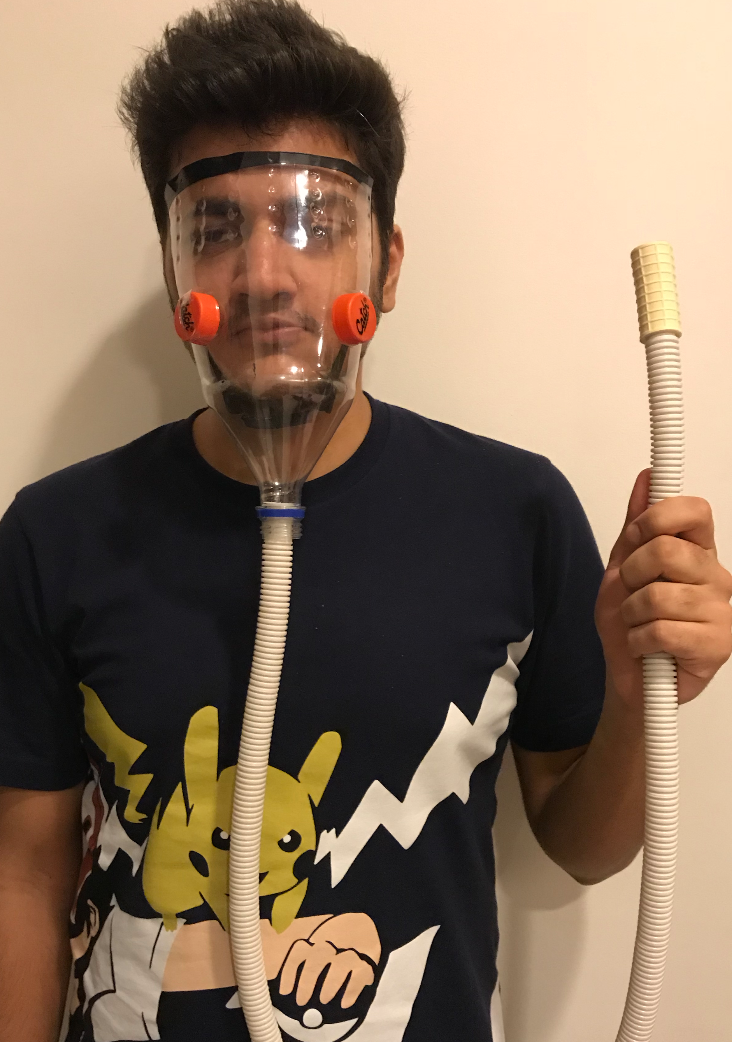
- Close facial fit is observed. Depending upon size of bottle more facial area can be covered.
- Greater ease in breathing than wearing a triple layer mask as the front surface does not press against nose and mouth.
- Aesthetically unpleasing- Not very comfotable to wear it socially else others are wearing them too.
- No comments can be made on inlet and outlet air chambers filtration efficiency as no standardized test/metric was readily available to test prototype. However, an experiment can be designed with vapours with a bacterial biofilm. This setup required lab testing which was not fairly accessible at this point.
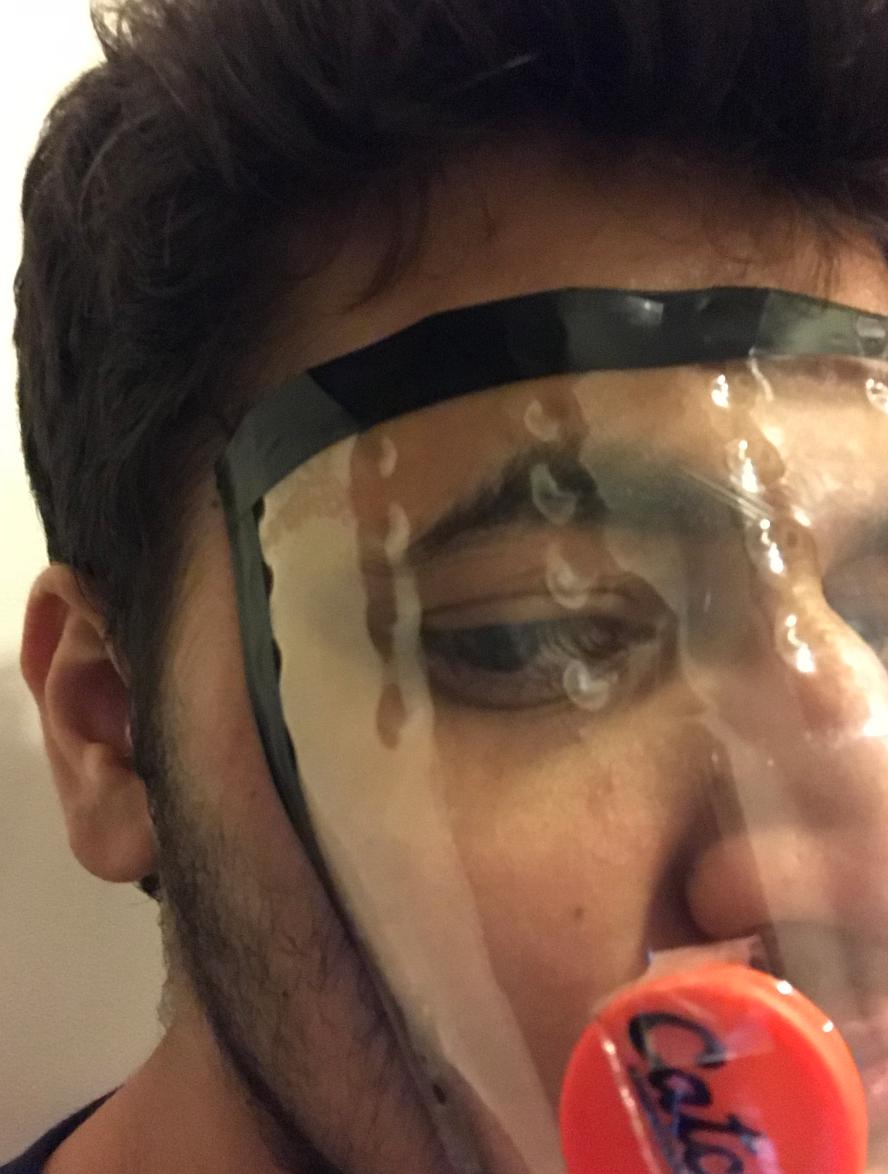
- Visibility is affected if bottle used is old and worn out. Also due to curvature in bottle shape vision can be distorted too. Biggest drawback till now is that you cannot wear eyeglasses underneath the facial respirator.
Solution
On the basis of needs sketched for target community, primarily two solutions were discussed -
Prototype sketches-Modified respirator
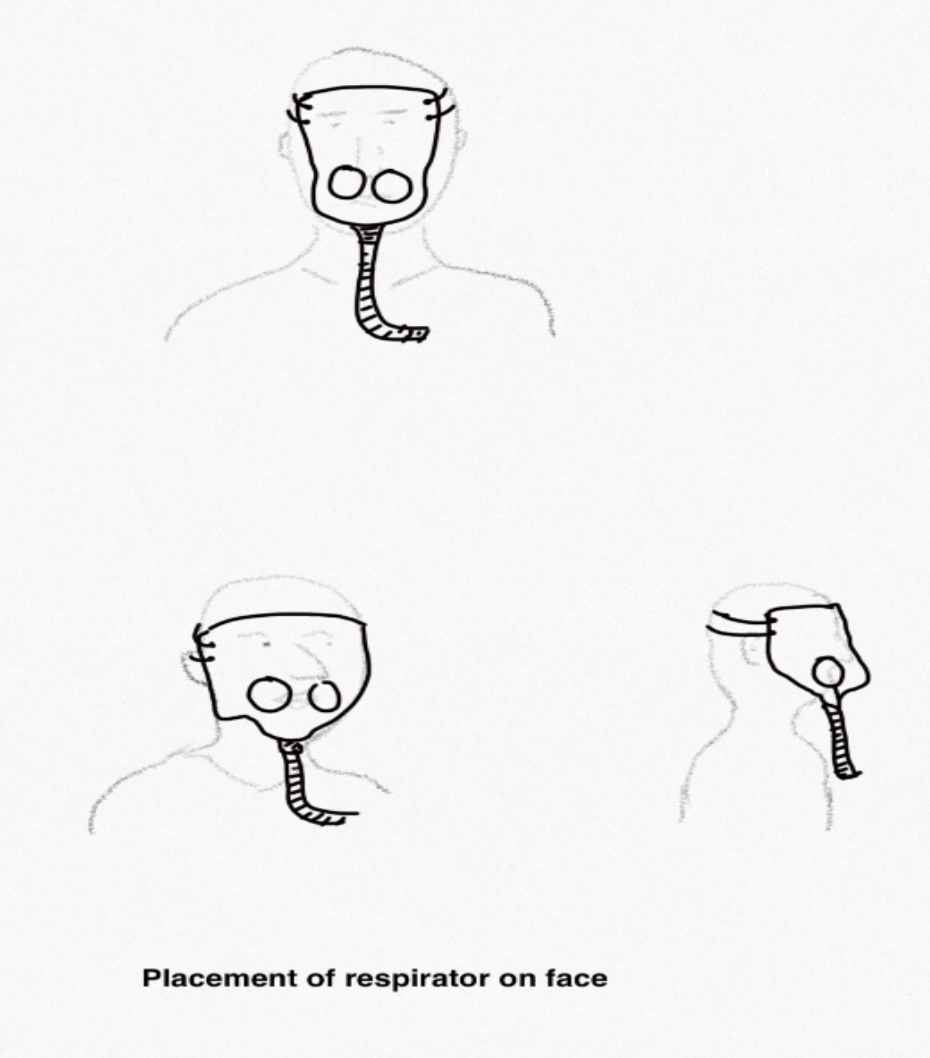
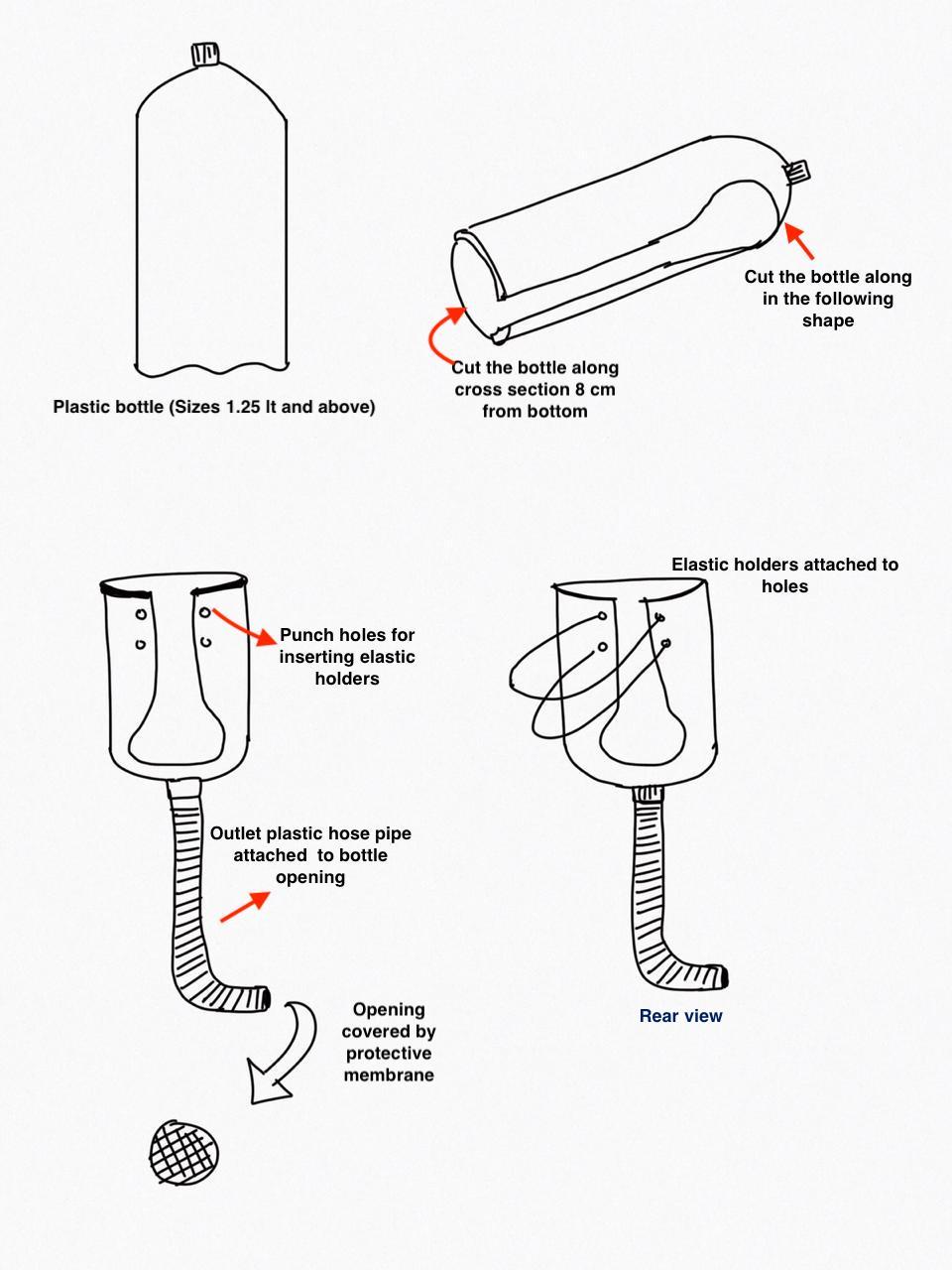
N95 Respirators/Masks have a non-woven structure or a plastic casing (in case of respirators) and a filtration membrane for blocking the external particulate matter. A similar design which works as a respirator can be designed using plastic bottles, latex/nitrile membrane and a plastic pipe as shown in sketches below.
The design of modified respirator was inspired by a hobbyist video explaning how to make Gas mask respirators from plastic bottles [2]
Production and Working
Materials required-
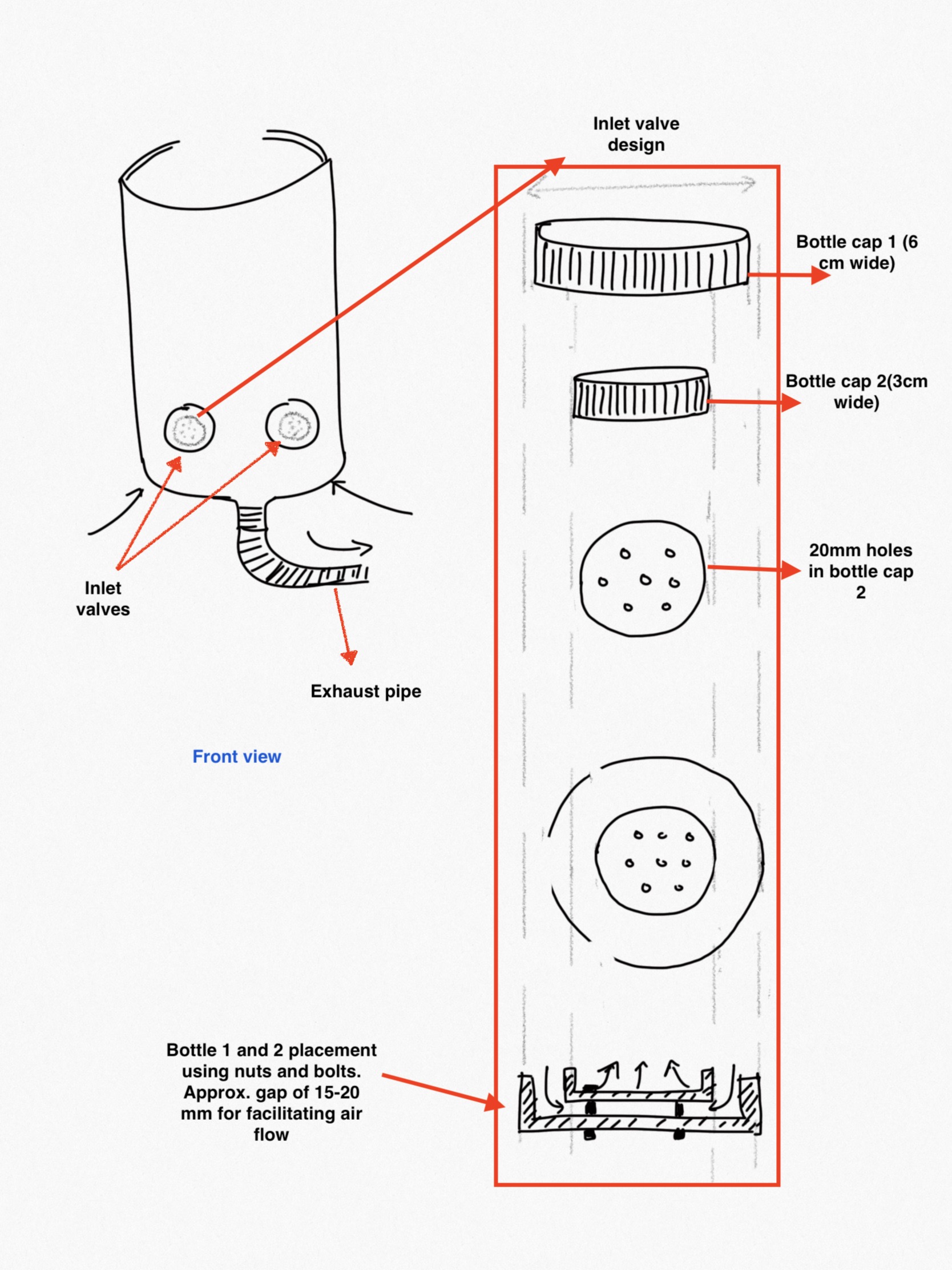 Production and distribution can be decentralized effectively in different districts in a hygienic environment by a set of workers with training sessions to produce the end-product. Further, each district can cater to demand of nearby health centres and populations.
Costs per respirator including raw material and labour can range from Rs 10-20 depending upon the quantity produced. However, this cost is competitive to average triple layer mask price but most of the costs are related to labour and some parts of raw materials. This can be further driven down to Rs 1-5 per unit if household production is adopted.
Production and distribution can be decentralized effectively in different districts in a hygienic environment by a set of workers with training sessions to produce the end-product. Further, each district can cater to demand of nearby health centres and populations.
Costs per respirator including raw material and labour can range from Rs 10-20 depending upon the quantity produced. However, this cost is competitive to average triple layer mask price but most of the costs are related to labour and some parts of raw materials. This can be further driven down to Rs 1-5 per unit if household production is adopted.
CAD Model
Testing
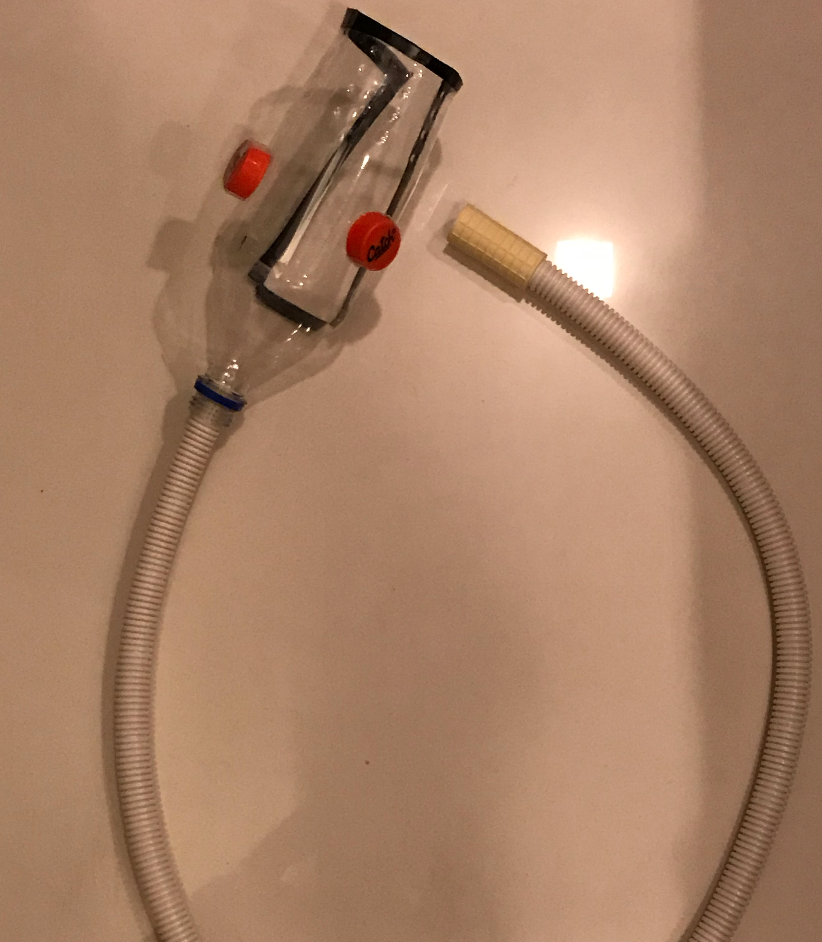
Working prototype made in home and tested on Sannat. Here are a few pictures-
 Insights from testing-
References