Research
Our research interests are to study fundamental properties of functional nanostructures, nanocomposites, semiconducting, magnetic and superconductor materials and explore its novel applications.
v
Effect of Intrinsic
Strain/defects
in the Nanostructures Materials
One of theme of research is to explore the effect of
presence of intrinsic stress/strain in nanostructured materials/films on
magnetic and optical properties. we have demonstrated that by controlling the
intrinsic stress magnetic/optical properties of
CoFe2O4
and optical properties of semiconducting nanoparticles can be tuned.
CoFe2O4 nanoparticles
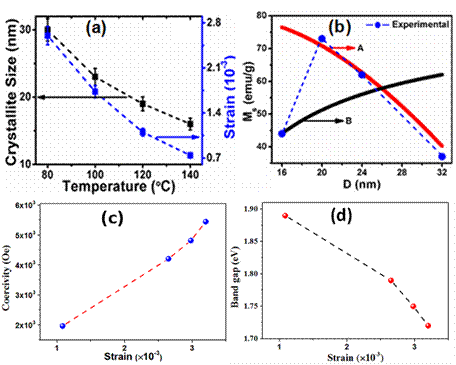
(a) Variation of crystalline size and strain with
synthesis
temperature of the CFO nanoparticles (b) Variation of Ms with
particles size diameters of the CFO nanoparticles (Solid lines are simulated
curves). The variation of magnetic coercivity and optical band gap of CFO
nanoparticles with intrinsic strain is shown in (c) and (d)
respectively.
(https://doi.org/10.1016/j.apsusc.2015.12.205)
Cu2ZnSnS4
nanoparticles:
The crystallite size of the as deposited and heated ?lms was remain similar but the intrinsic strain varies and optical band gaps of the CZTS ?lms decerase with the increase of the heating temperature. The observed red shift in the band gap of the CZTS nanostructured ?lms was not due to the size e?ect and has been attributed to intrinsic stain present in the CZTS nanostructured films.
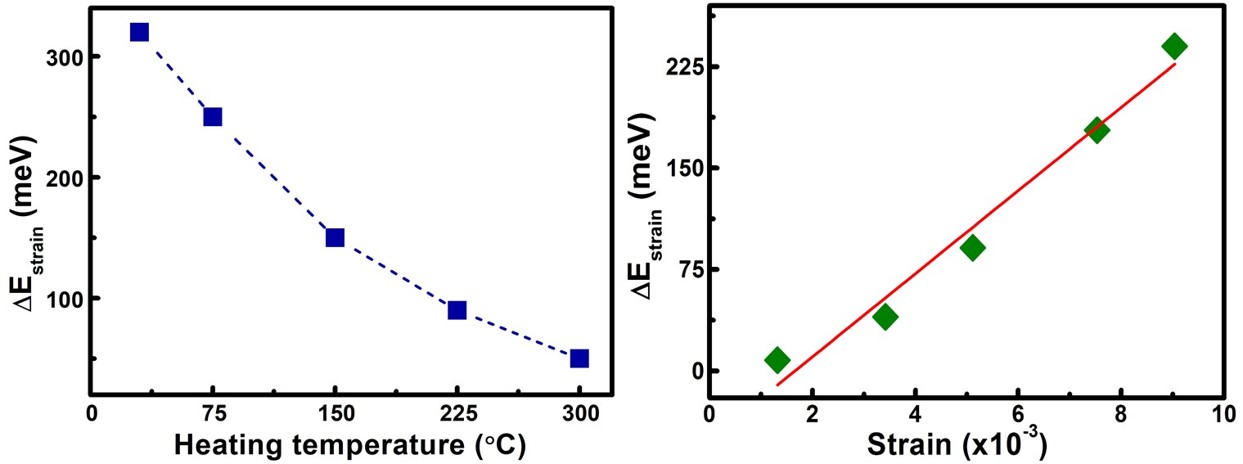
The Variation ofΔEStrain
with the
intrinsic strain in CZTS nanostructures films heated at different temperature.
(https://doi.org/10.1016/j.tsf.2018.05.003)
ZnO nanostructures films:
We have demonstrated that by controlling
Al doping in ZnO nanostructured films, the stress in the film can be
tuned, which result in the variation of the optical band gap and
Photoluminance properties of the films.
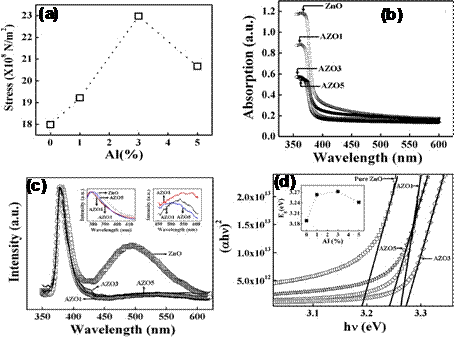
(a)
Variation of stress as a function of different wt% of Al
doping in ZnO nanostructured films (b) Optical absorption spectra of ZnO and
AZO films (c) Normalized PL spectra of ZnO and AZO films. Inset (a) shows the
blow-up part of UV emission and inset shows the blow-up part of defect peaks
for AZO films. (d) plot of (αhν)2 versus photon energy
(hν) for ZnO and AZO films. Inset shows the variation of band gap of ZnO
films with different Al concentrations.(https://doi.org/10.1088/0022-3727/43/46/465402)
v
Resistive Switching
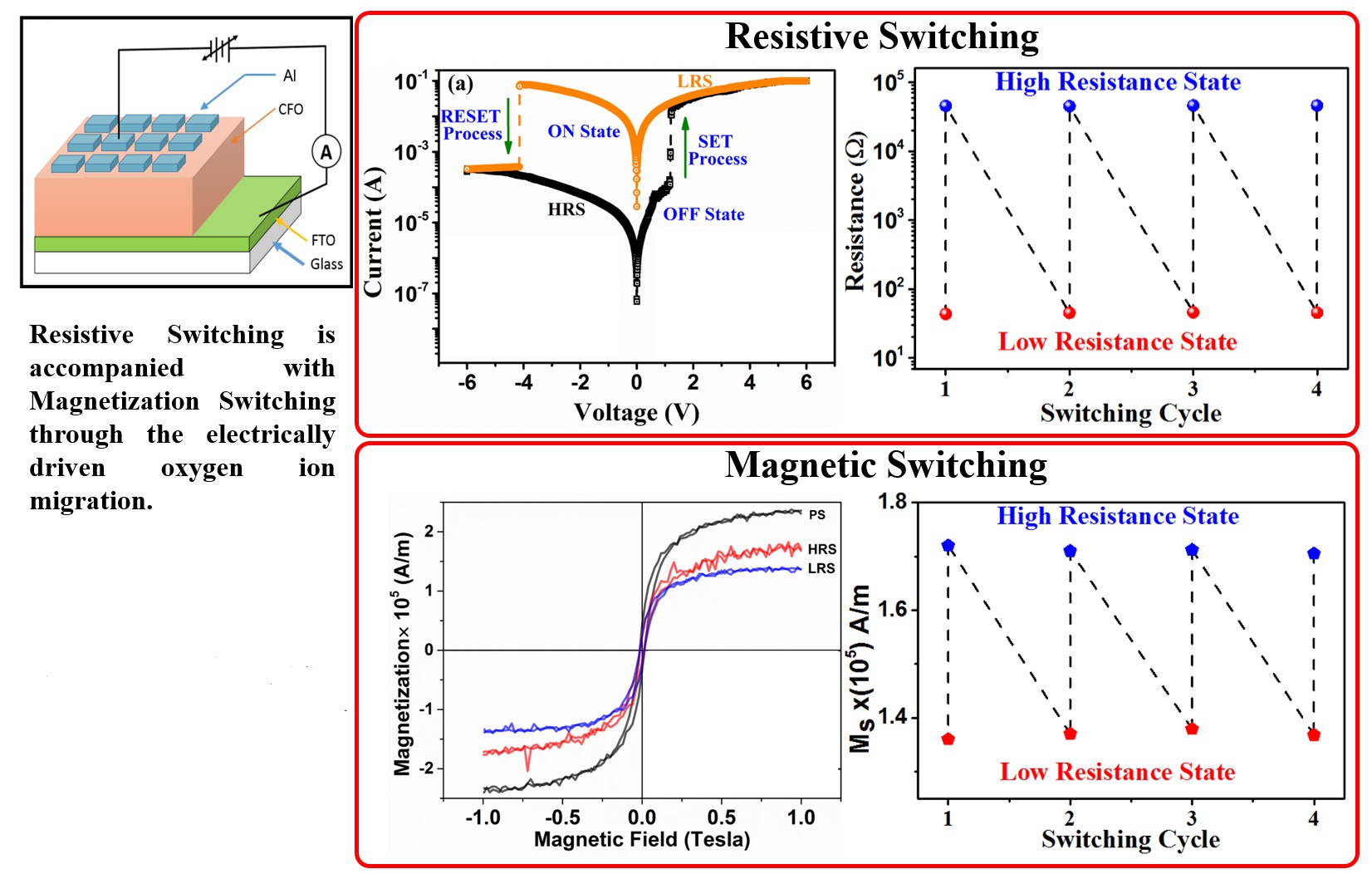
Valence Change Bipolar Resistive Switching Accompanied With Magnetization Switching in CoFe2O4 Thin Film.
Resistive Switching in oxides has offered new opportunities for developing resistive random access memory (ReRAM) devices. Here we demonstrated bipolar Resistive Switching along with magnetization switching of cobalt ferrite (CFO) thin film using Al/CFO/FTO sandwich structure. Nearly constant resistance values in LRS and HRS confirm the stability and non-volatile nature of the device. The device shows different conduction mechanisms in the HRS and LRS i.e. Schottky, Poole Frenkel and Ohmic. Magnetization of the device is also modulated by applied electric field which has been attributed to the oxygen vacancies formed/annihilated during the voltage sweep and indicates the presence of valence change mechanism (VCM) in our device.
Tuning of optical bandgap and magnetization of CoFe2O4 thin films.
(https://doi.org/10.1063/1.4890863)We
demonstrated that the optical bandgap and the saturation magnetization of
CFO films
can be modified by controlling the annealing temperature of CFO films and by
controlled doping if Zn in CFO. We have correlated these changes in the
optical
and magnetic properties of the post annealed films at different temperatures
and Zn doped CFO films with the redistribution of Co2+ among tetrahedral and
octahedral sites and explained it quantitatively using the Raman peak
intensity
ratio which is a novel approach.
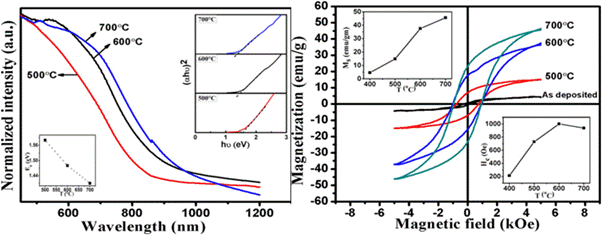
Tuning of optical bandgap
and magnetization of CoFe2O4 thin films through
controlled annealing
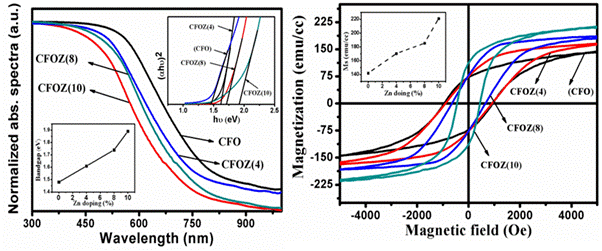
Tailoring the optical bandgap and magnetization of cobalt
ferrite thin films through controlled zinc doping.(https://doi.org/10.1063/1.4960989)
v
Magnetically Tunable
Band
pass And Band stop Microwave
Filters
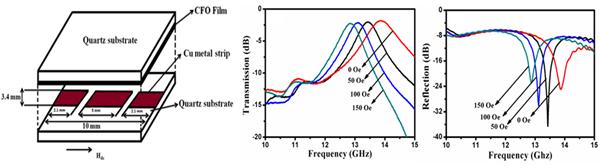
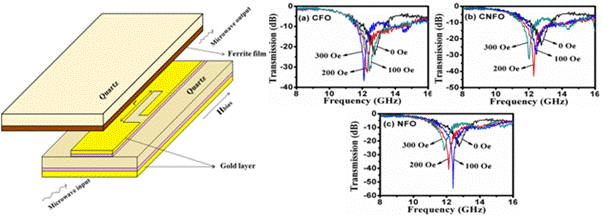
Bandpass microwave filter
with CFO
thin film in the flip-chip geometry and Transmission characteristic of
microwave filter.
(https://doi.org/10.1016/j.ssc.2016.01.014)
Spur-line based bandstop filter with ferrite
thin films in the flip-chip geometry and Transmission characteristic of
microwave filter.
v
Tunability of 7-8% for a small magnetic field of ~ 250 Oe
has been demonstrated.(https://doi.org/10.1063/1.4982592)
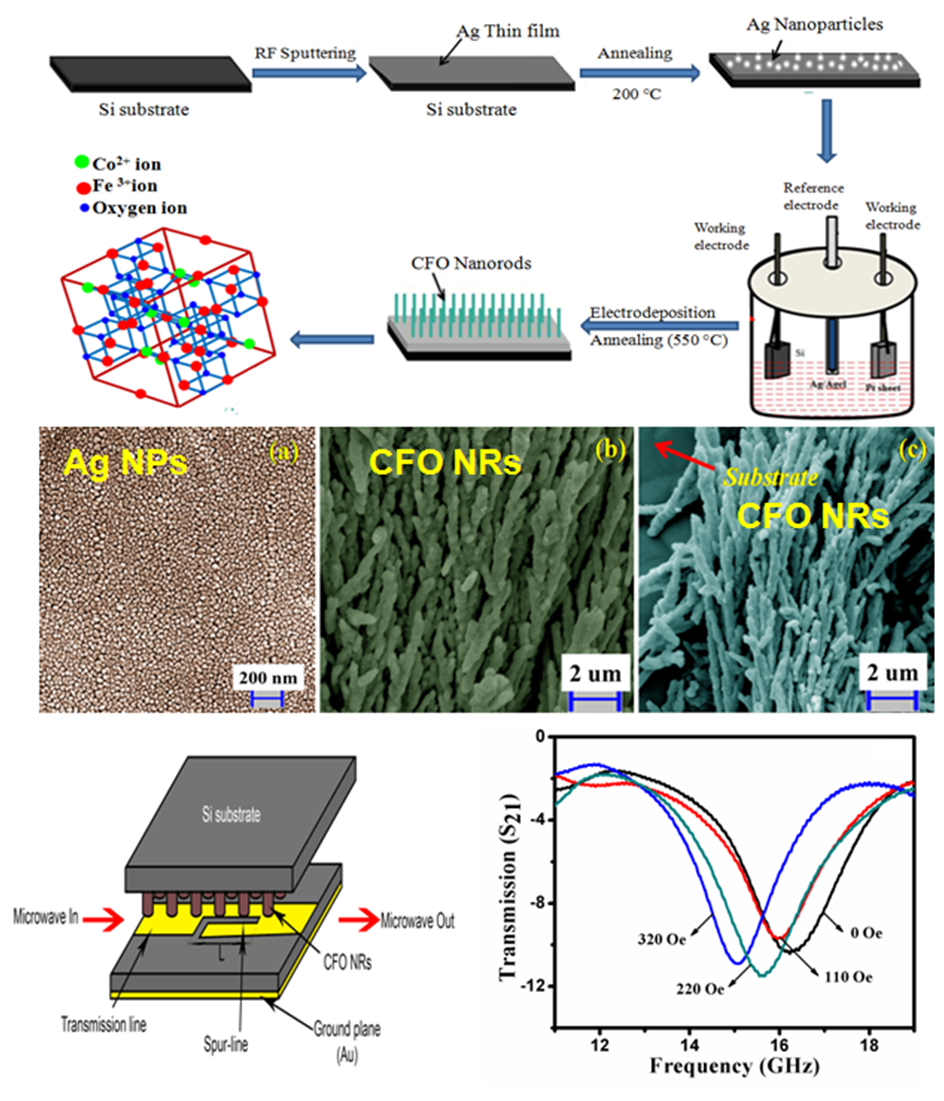
Spur-line bandstop filter with
CFO NRs in the flip-chip geometry and Transmission characteristic of bandstop
filter
v
Clean Energy and Environment
Thermoelectrics:
Nanostructures,
nanocomposites and thin films for harvesting thermal energy
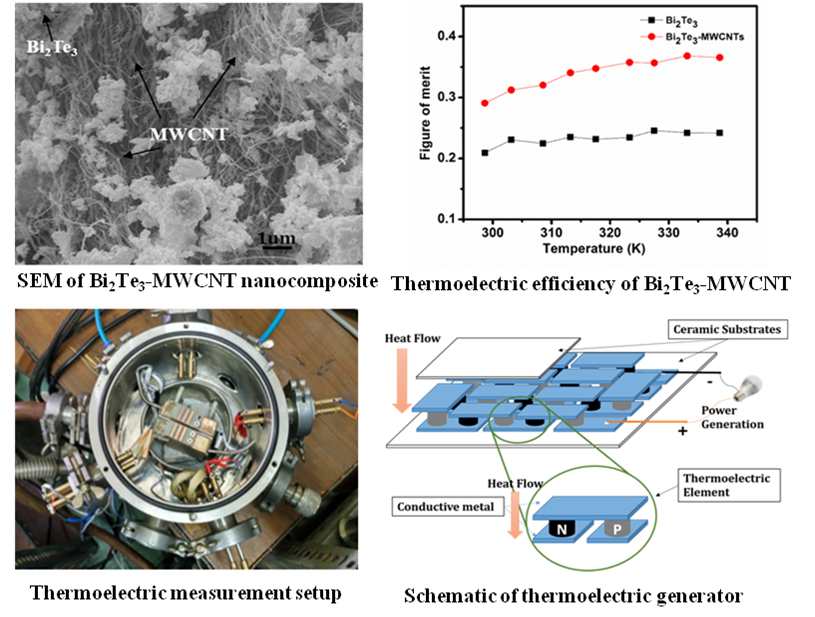
Our
research approach is to develop nanocomposite materials by combining
nanostructure semiconducting materials with CNT/2D material and polymer to
enhance figure of merit. The combination of semiconducting nanostructures
with
2D/CNT is expected to enhance electrical conductivity and cut down to thermal
conductivity due to enhanced phonon scattering at the interfaces. We are
exploring properties of various nanocomposites such as
Bi2Te3-MWCNT,
Bi2Te3-RGO, Sb2Te3-RGO,
Bi2Te3-CFO
etc. with the objective to develop efficienct thermoelectric generator.(https://doi.org/10.1016/j.ceramint.2017.08.017)
Nanogenerator for harvesting mechanical
energy
We are designing and synthesizing flexible nanogenerators
based on Piezoelectric and Triboelectric effect
for energy harvesting applications. By combining
piezoelectric/ferroelectric nanostructures and RGO material with PVDF, we
demonstrated that flexible nanogenarator with enhanced performance can be
obtained. This smart device can be productively used for driving small scale
electronic devices at any environmental conditions.
(https://doi.org/10.1002/pat.4096) (https://doi.org/10.1016/j.compscitech.2017.06.013)
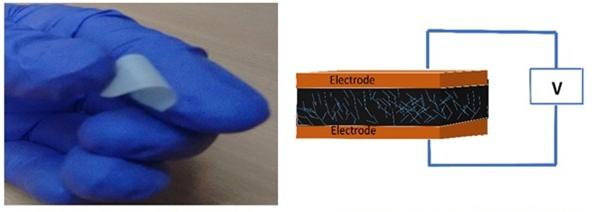
Free standing flexible
nanocomposites film, schematic diagram for fabricated Piezoelectric
nanogenerator (PENG)
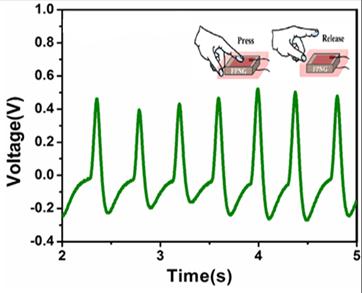
Output voltage of PENG with hand
tapping
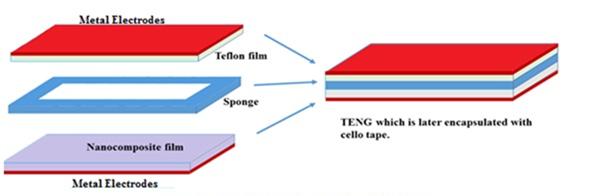
Fabrication of vertical contact mode Triboelectric
Nanogenerator (TENG)
Photoelectrochemical Water Splitting for Hydrogen
Generation
Our focus is to develop nanocomposites for efficient
photoanodes which can result in enhanced photoelectrochemical water splitting
for hydrogen generation under visible light. We have synthesized
nanocomposites
by combing semiconducing nanostructures with 2D material, CNR, ferroelectric
which show higher absorption of visible light, higher separation
efficiency of
photogenerated electro-hole pairs and with extra functionality for tuning PEC
properties.
Electrical
Tuning of Photoelectrochemical Properties of Ferroelectric Nanostructure
NaNbO3
Films
Photoelectrochemical properties of NaNbO3
nanostructure ferroelectric films are investigated and it is demonstrated
that
efficiency of photoelectrochemical (PEC) water splitting can be tuned (
from 7%
to 23%) by electrical polarization of the NaNbO3
films.(https://doi.org/10.1063/1.4980100)
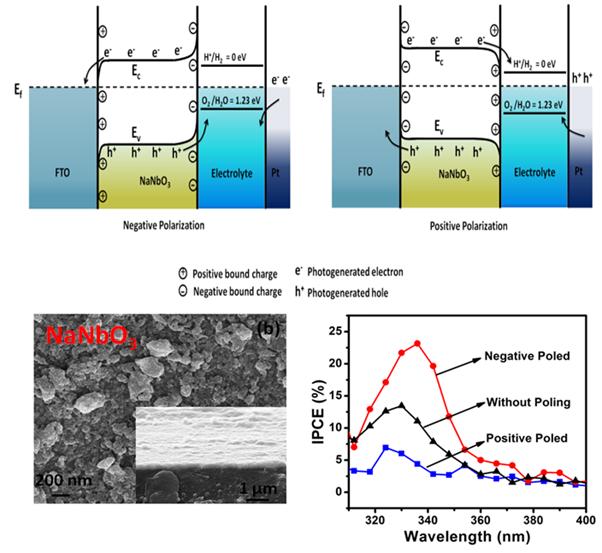
Coupling of
Piezoelectric, Semiconducting and Photoexcitation Properties in
NaNbO3
Nanostructures for Controlling Electrical Transport: Realizing an Efficient
Piezo-Photoanode and Piezo-Photocatalyst
Demonstrated an efficient coupling between piezoelectric,
semiconducting and photoexcitation properties in chemically stable
NaNbO3
semiconductor with an aim to enhance the efficiency of PEC water splitting
and
photocatalytic activities. It can be used as a potential alternative material
for piezophototronic applications.(https://doi.org/10.1016/j.nanoen.2017.05.029)
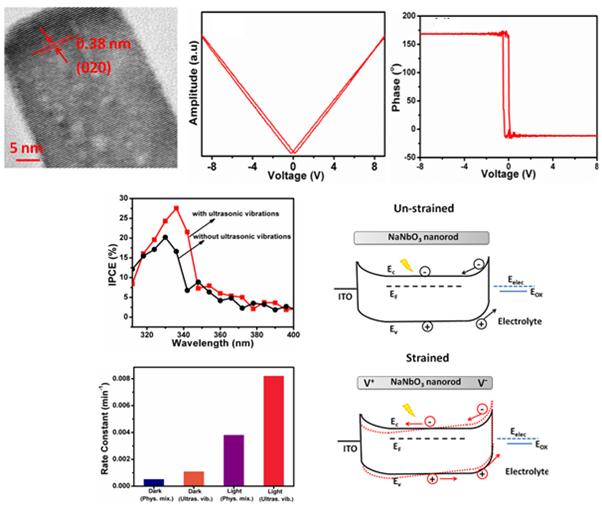
Plasmonic
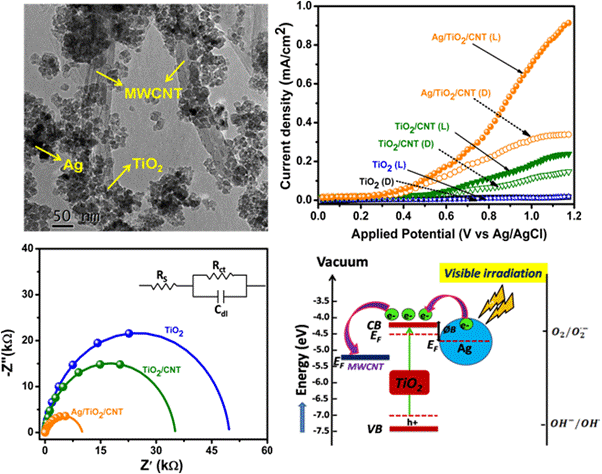
nanostructures based on TiO2/Ag/CNT
A
visible light active plasmonic
photocatalyst, Ag/TiO2/CNT was
synthesized by loading of Ag nanoparticles onto TiO2/CNT nanocomposite. The ternary Ag/TiO2/CNT photoanode exhibits a ~4 times
higher
photocurrent density (0.91 mA/cm2) as compared to the binary TiO2/CNT
photoanode (0.23 mA/cm2). The
enhancement in the photocatalytic activity is attributed to the synergistic
effect between Ag nanoparticles and MWCNT, which enhance the charge
separation
efficiency by Schottky barrier formation at Ag/TiO2 interface and
role of MWCNT as an electron reservoir.
Photosensitization
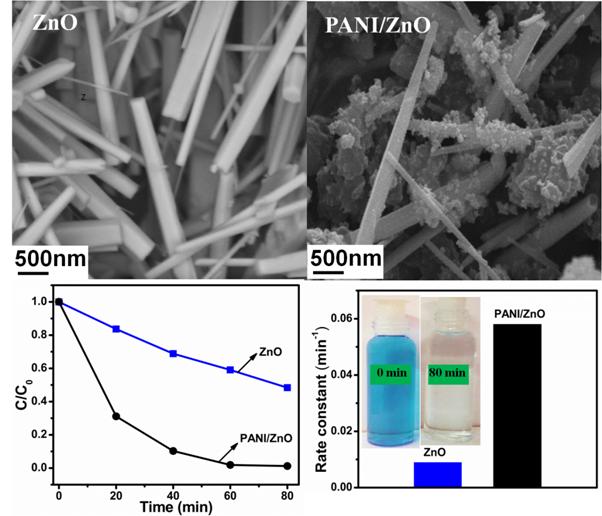
of zinc oxide nanorods with polyaniline
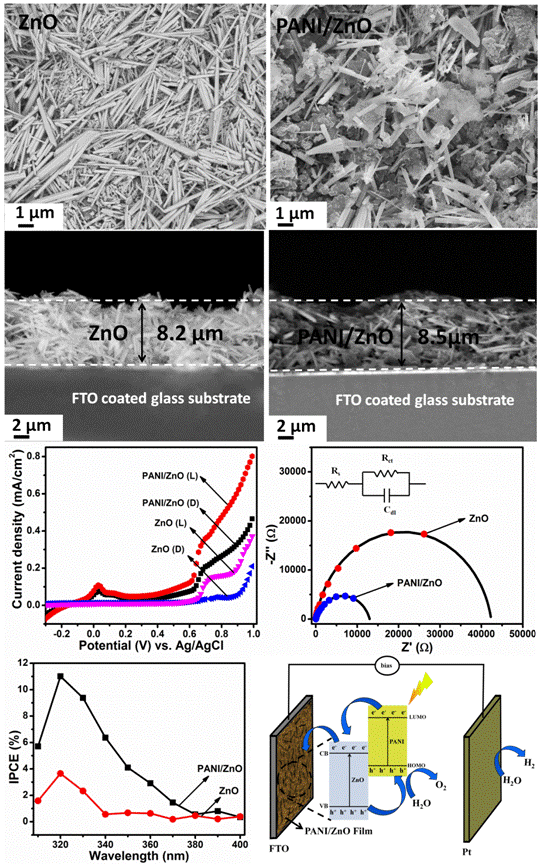
A ~3 fold enhancement in
the incident photon-to-electron conversion efficiency is observed for
PANI/ZnO
nanocomposite ascompared to bare ZnO nanorods. The observed enhancement in
the
photoelectrochemical activity is attributed to the photosensitization
effect of
visible light responsive PANI and the formation of type-II heterojunction
between ZnO and PANI leading to the efficient separation and faster
transfer of
photoinduced charge carriers at the interface.(https://doi.org/10.1016/j.ijhydene.2016.08.131)
Nanostructure Photocatalysts for Efficient Degaradation of
Organic Dye
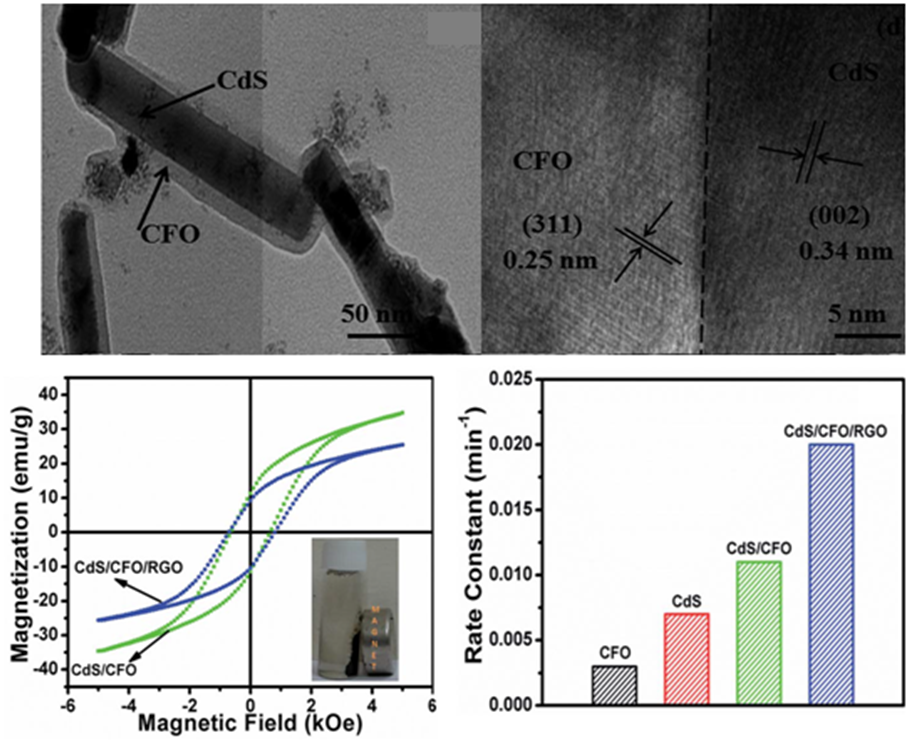
Enhanced photocatalytic activity and magnetic separation using cadmium
sulfide and cobalt ferrite (CdS/CFO) core-shell nanostructures is
demonstrated.
Reduced graphene oxide
coupled CdS/CoFe2O4 ternary nanohybrid with enhanced
photocatalytic
activity and stability.(DOI: 10.1039/C5RA14889H)
Polyaniline
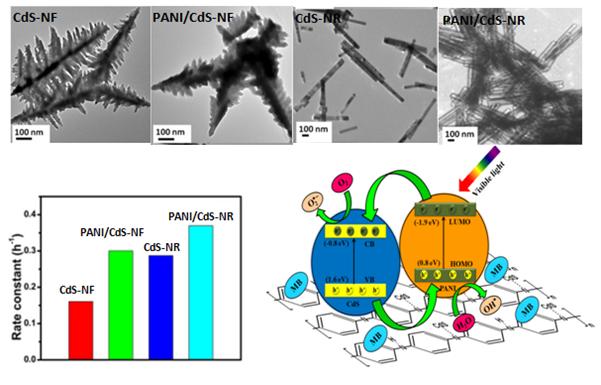
coupled cadmium Sulfide Nanorods and Nanoflowers: A comparative study for
enhanced photocatalytic activity.
(DOI 10.1007/s00396-016-3844-4)
Enhanced
Photosensitization of Zinc Oxide Nanorods using polyaniline for
photocatalytic
degradation of MB dye.(https://doi.org/10.1016/j.ijhydene.2016.08.131)
Solar
Cell
CZTS
nanoparticles for Photovoltaic application.
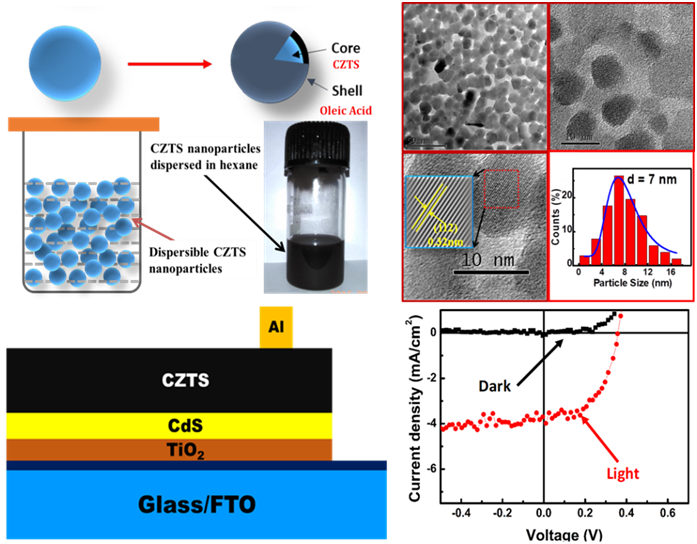
A core shell structure of
dispersible, uniform and small size oleic acid coated CZTS nanoparticles (Size~7nm) was synthesized. A
solar cell device based on
Al/CZTS/CdS/TiO2/FTO
solar cell was fabricated. J-V characteristics of solar cell device under
dark
and light condition (100mW/cm2) and the power conversion
efficiency
of solar cell is obtained to be ~0.65%.(https://doi.org/10.1016/j.apt.2017.06.023)
.