
ABRL@IITD

THE GROUP

RESEARCH

PUBLICATIONS

PATENTS

PROJECTS

GROUP ACTIVITIES

NEWS

CONTACT

RESEARCH INTEREST

High Energy Rechargeable RT-Na/S Batteries

The high-energy room-temperature sodium-sulfur (Na-S) battery is an emerging energy storage technology that offers a promising alternative to conventional lithium-ion systems. Unlike traditional Na-S batteries, which require high operating temperatures to maintain molten electrodes, room-temperature designs employ advanced electrolytes and electrode materials that enable efficient ion transport at ambient conditions. This innovation not only improves safety by eliminating the need for extreme heat but also reduces energy consumption and system complexity. With sodium being far more abundant and cost-effective than lithium, these batteries hold great potential for large-scale applications such as renewable energy storage and mobiity applications. Moreover, their high theoretical energy density and environmental benefits make room-temperature Na-S batteries a strong candidate for future sustainable energy systems. We explore post-Li ion battery chemistries that can surpass the energy limits of today's rechargeable batteries. High-energy electrode materials such as sodium, magnesium, aluminium, and zinc are abundant and low-cost. By controlling the structural and chemical aspects of these materials, we design novel battery materials and develop battery prototypes. Equal emphasis is given to understanding structure-property relationships through state-of-the-art characterization tools.

High Energy Dual-Ion Batteries illustration

High Voltage and Fast-charge Dual-Ion Batteries

High-energy sodium-based dual-ion batteries (Na-DIBs) represent a next-generation energy storage system designed to combine cost-effectiveness, sustainability, and high performance. Unlike conventional batteries, where only one type of ion shuttles between electrodes, dual-ion batteries utilize both cations (Na⁺) and anions to participate in the charge–discharge process, significantly enhancing energy density. Sodium, being far more abundant and less expensive than lithium, offers a scalable pathway for large-scale applications such as renewable energy integration and grid storage. Recent advances in electrode materials and electrolytes have improved the efficiency, cycling stability, and voltage performance of Na-DIBs, moving them closer to practical commercialization. Their potential to deliver high energy output, coupled with low material cost and environmental benefits, makes sodium-based dual-ion batteries a strong contender in the future of sustainable energy storage technologies. Dual-ion batteries offer advantages over traditional batteries, including high operating voltage, fast-charging behavior, cost-effectiveness, and environmental friendliness. However, their specific capacity is significantly low and needs to be increased at least threefold for practical applications. Our group focuses on manipulating the surface chemistry of electrode materials through various routes to boost specific capacity without sacrificing core attributes.

High Energy Supercapacitors illustration

HHigh Energy Pseudocapacitors/Hybrid-capacitors

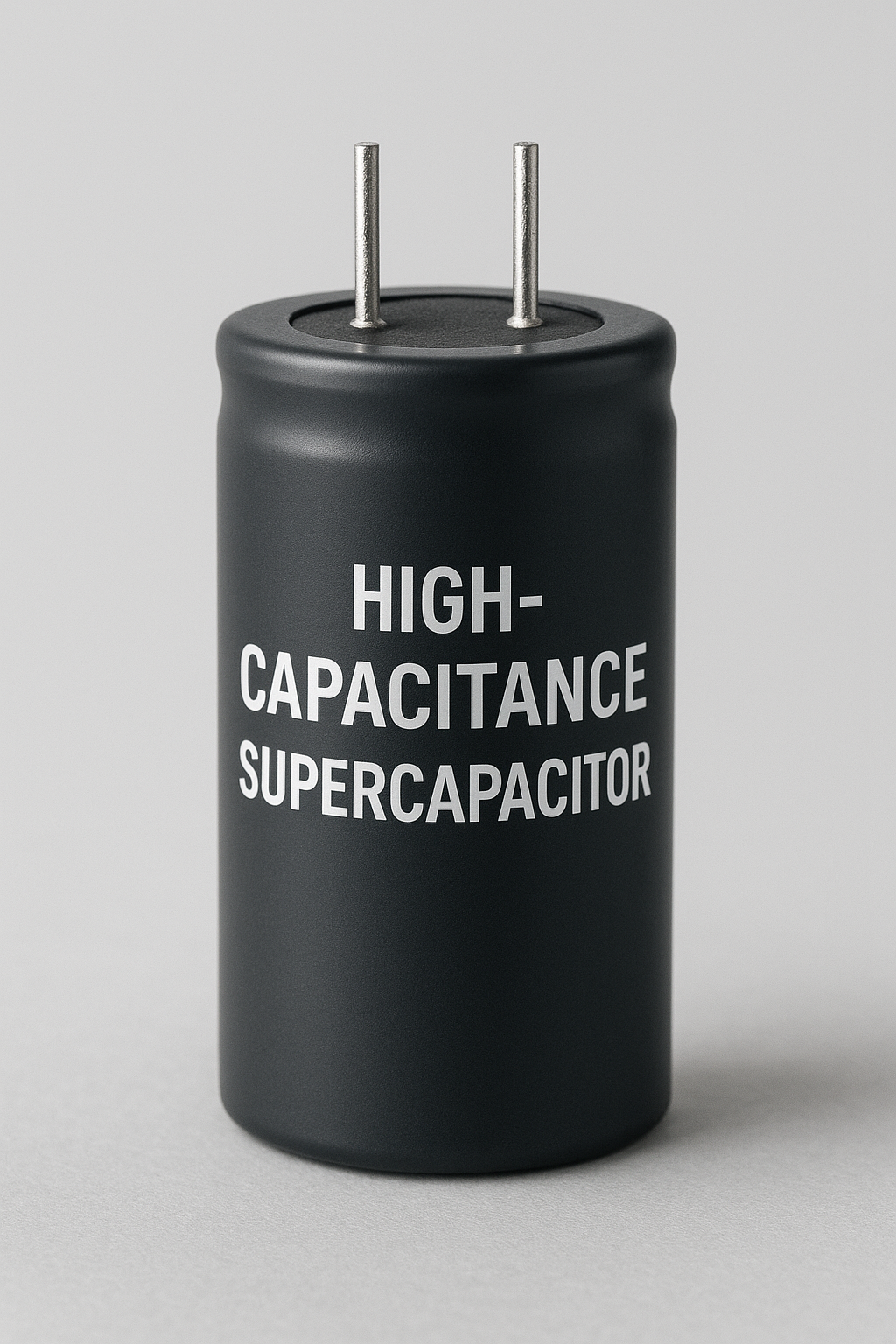
High-energy supercapacitors based on metal oxides have emerged as promising energy storage devices due to their exceptional electrochemical performance, combining high specific capacitance, fast charge–discharge rates, and long cycle life. The metal oxides are attractive because of their multiple oxidation states, which enable rich redox reactions and significantly enhance charge storage capacity compared to carbon-based materials. Their high energy density makes them suitable for bridging the gap between conventional capacitors and batteries, supporting applications in portable electronics, electric vehicles, and renewable energy systems. However, challenges such as poor intrinsic conductivity, structural instability during cycling, and high production costs must be addressed. Strategies like nanostructuring, hybridization with conductive substrates (e.g., graphene or carbon nanotubes), and doping are being explored to overcome these limitations and unlock the full potential of metal oxide–based supercapacitors. Supercapacitors have much higher power density than batteries due to their inherent storage mechanism, but lack energy density. To enhance energy density, our group manipulates the structure of electrode materials through solution synthesis routes. Transition metal oxides are used to enhance faradaic contributions, while special carbon scaffolds ensure high electronic conductivity.

Soft Materials for Energy Applications illustration

Smart Sensors for Li-ion Battery Applications

Sensors are essential components in advanced battery systems, ensuring safe operation and prolonging device lifespan by monitoring critical physical changes. Thermal sensors detect temperature variations, which are crucial for preventing overheating, thermal runaway, and performance degradation caused by excessive heat during charging and discharging. Mechanical sensors, on the other hand, track strain, stress, and pressure within the battery structure, providing valuable insights into phenomena such as electrode expansion, gas generation, or mechanical deformation that can lead to safety hazards or capacity loss. Together, these sensors enable real-time feedback for battery management systems, supporting early fault detection, predictive diagnostics, and optimized operating conditions. Our research group is focusing on developing thermal and mechanical sensors for safe battery operation.