Welcome to our lab

We are an interdisciplinary research team in the Department of Chemical Engineering at IIT Delhi working at the interface of glycobiology, biophysics, nanotechnology, and biomedical engineering. Our research seeks to understand how pathogens recognize, attach to, and interact with host cells during the earliest stages of infection. We investigate the molecular and physical principles governing these interactions, with a particular focus on the role of glycans and multivalent molecular recognition at biological interfaces. To address these questions, we develop and employ plasmonics-based sensing tools, quantitative experimental platforms, and engineering approaches to probe molecular interactions with high sensitivity and resolution.
Our work spans the discovery of new glycan biomarkers, the development of sensitive diagnostic technologies for early detection of infectious diseases, and the engineering of targeted therapeutic delivery systems to improve treatment outcomes.Through these efforts, we strive to bridge fundamental science and translational engineering, advancing both our understanding of the mechanisms governing disease development and the creation of accessible technologies for global health.

Why Glycans?

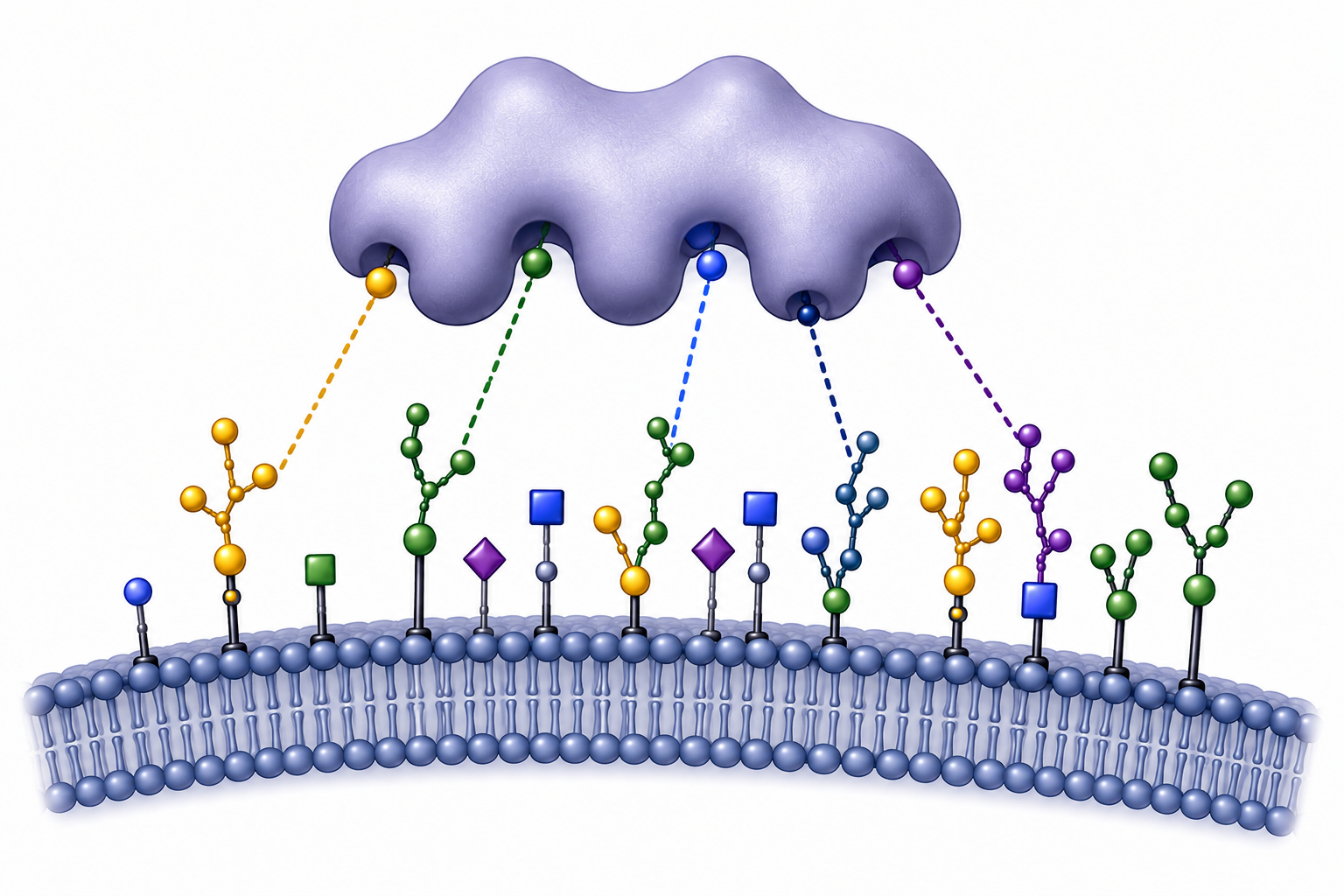
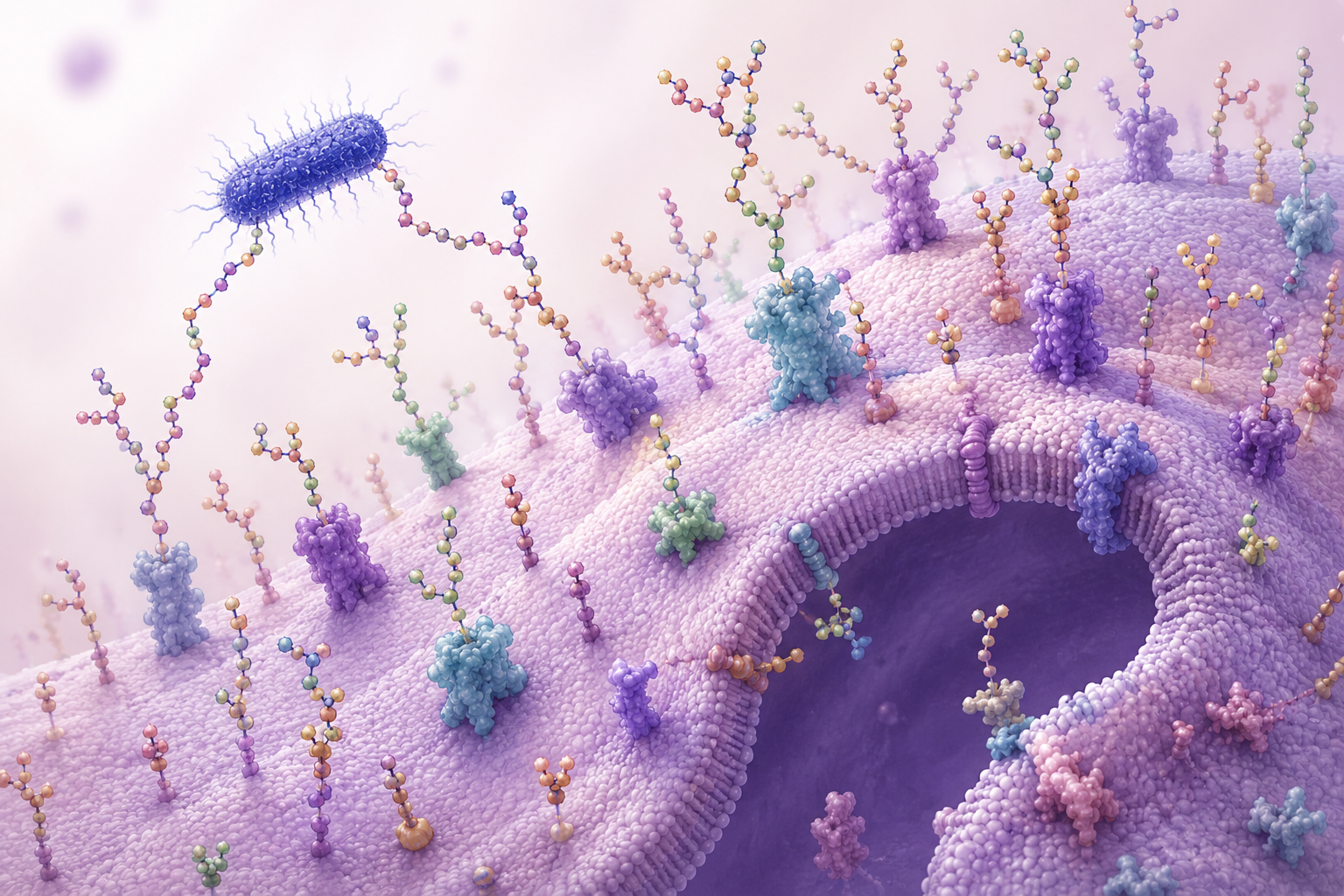
Glycans are complex sugar molecules that coat the surface of host cells and many pathogens, where they mediate critical processes ranging from cellular communication to infection. Because glycans often govern the earliest interactions between pathogens and host cells, they provide a unique window into how infections begin. Glycan expression modulation is a hallmark of many pathologies, acting as key drivers of disease progression in cancer, automimmune diseases, neurodegenerative disorders etc. By understanding these molecular recognition events, we aim to uncover new biological mechanisms governing various pathologies.
Why Plasmonics?

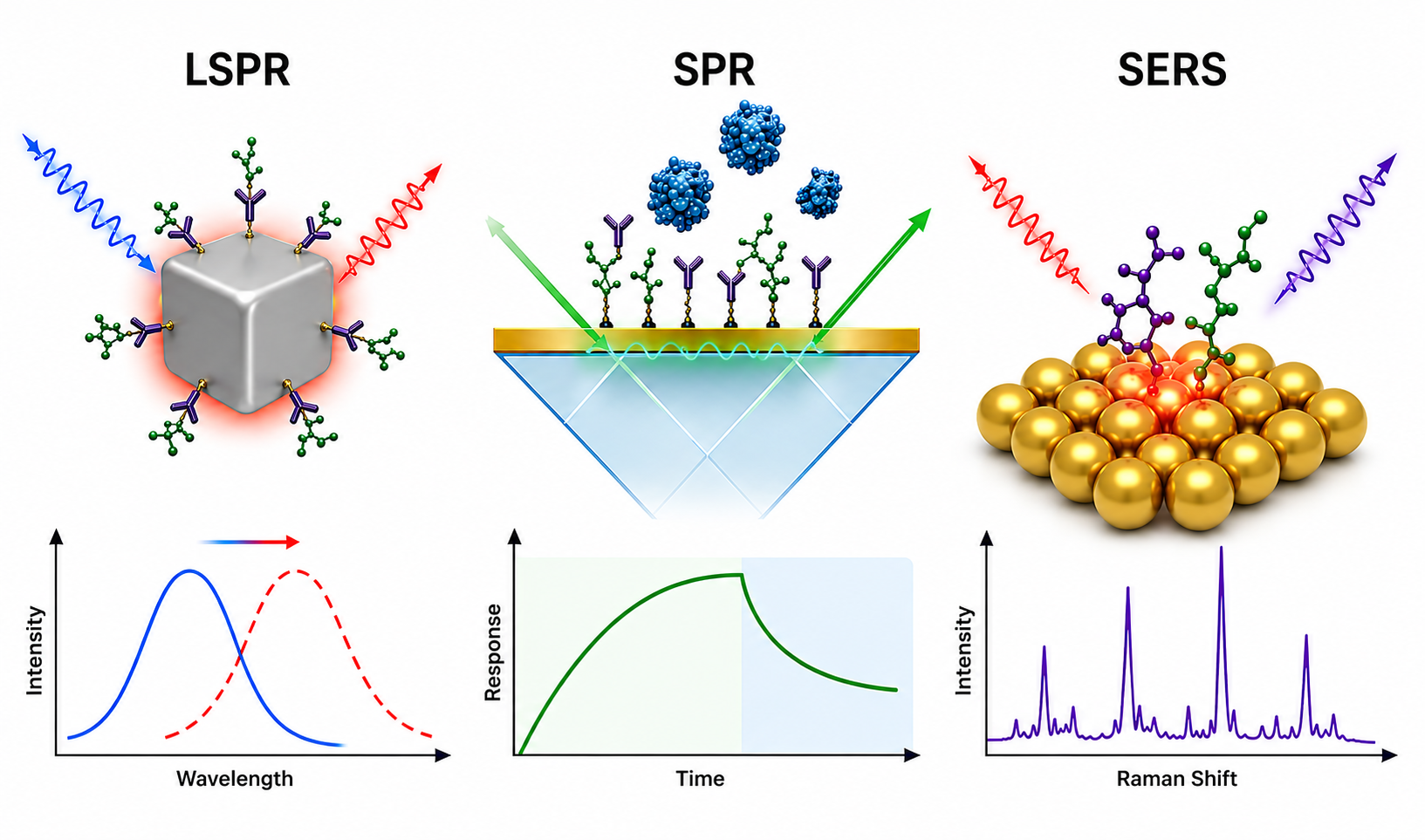
Many biologically important interactions, including those between pathogens and host cells, are inherently weak, transient, and difficult to detect using conventional analytical methods. Plasmonics provides a powerful way to amplify and monitor these molecular interactions with exceptional sensitivity, often without the need for labels or complex sample preparation. We use plasmonic techniques such as Localized Surface Plasmon Resonance (LSPR) enable real-time monitoring of binding interactions and are highly sensitive to changes occurring at the nanoscale, making them ideal for studying weak glycan-mediated interactions that are often missed by conventional methods. Surface-Enhanced Raman Spectroscopy (SERS) provides molecular fingerprints of biomolecules and pathogens, enabling sensitive and specific detection even in complex biological samples.

Applications

Insights gained from our studies of glycan-mediated molecular recognition and host–pathogen interactions are translated into technologies that address pressing healthcare challenges. Our work includes the development of sensitive biosensors for disease diagnosis enabling earlier and more specific detection of infectious diseases. We also engineer targeted drug delivery systems that exploit molecular recognition mechanisms to selectively direct therapeutics to sites of infection, with the goal of improving treatment efficacy while minimizing off-target effects and drug dosage. Through these efforts, we aim to bridge fundamental discoveries with practical solutions that improve disease detection, prevention, and treatment.