Anaerobic Digestion & Biogas Production
Research Interests
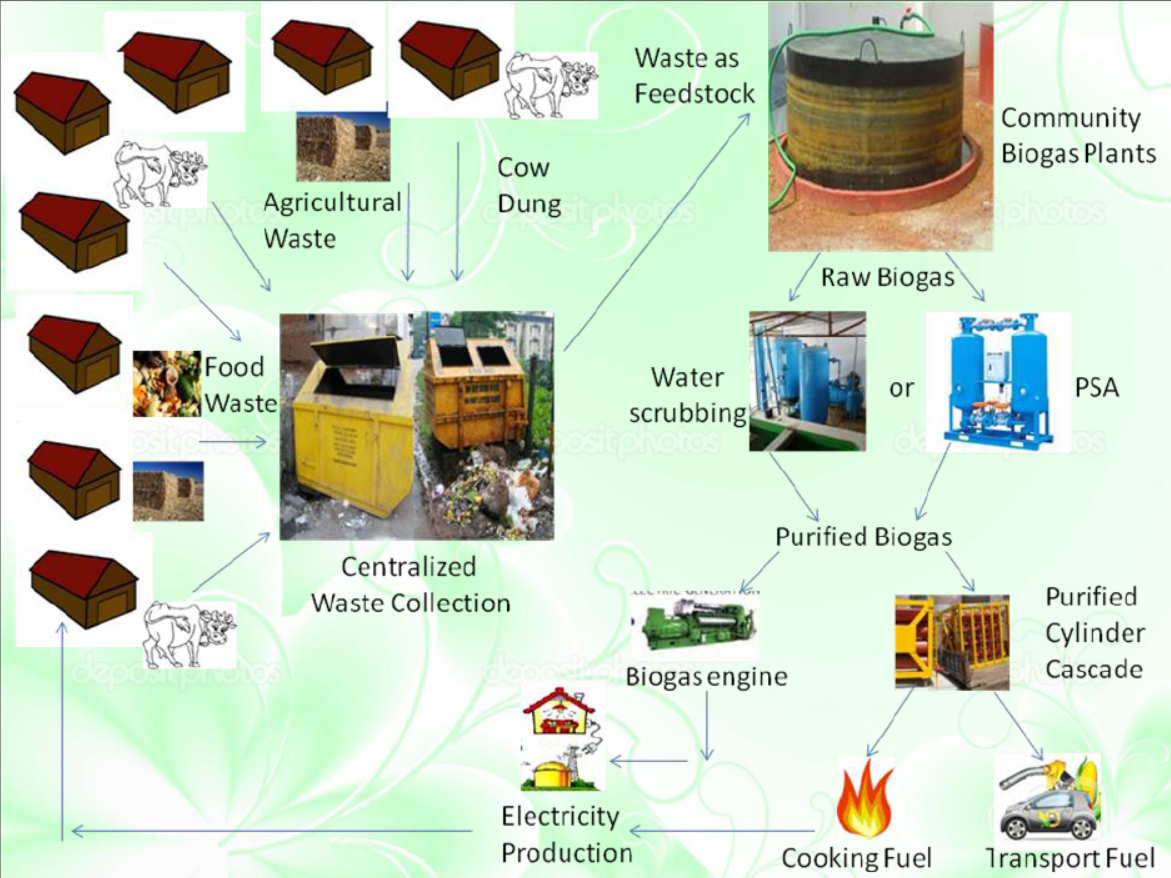
Biogas is an effective, renewable fuel with numerous benefits including environmental, energy, economic and waste management advantages, deployable in rural, urban and industrial areas. Biogas is emerging as a viable and sustainable route for managing waste and reducing dependence on fossil fuels.
Anaerobic Digestion
Research focuses on improving anaerobic digestion efficiency using co-digestion of various feedstocks including agricultural waste, cattle dung, food waste and municipal solid waste. Studies on microbial communities, process optimization and reactor design are actively pursued.
H2S Removal
Biochar and biogas slurry based H2S removal systems are under investigation in the laboratory, enabling cleaner biogas for end-use applications.
Biogas Enrichment & Bottling
Upgradation Technologies
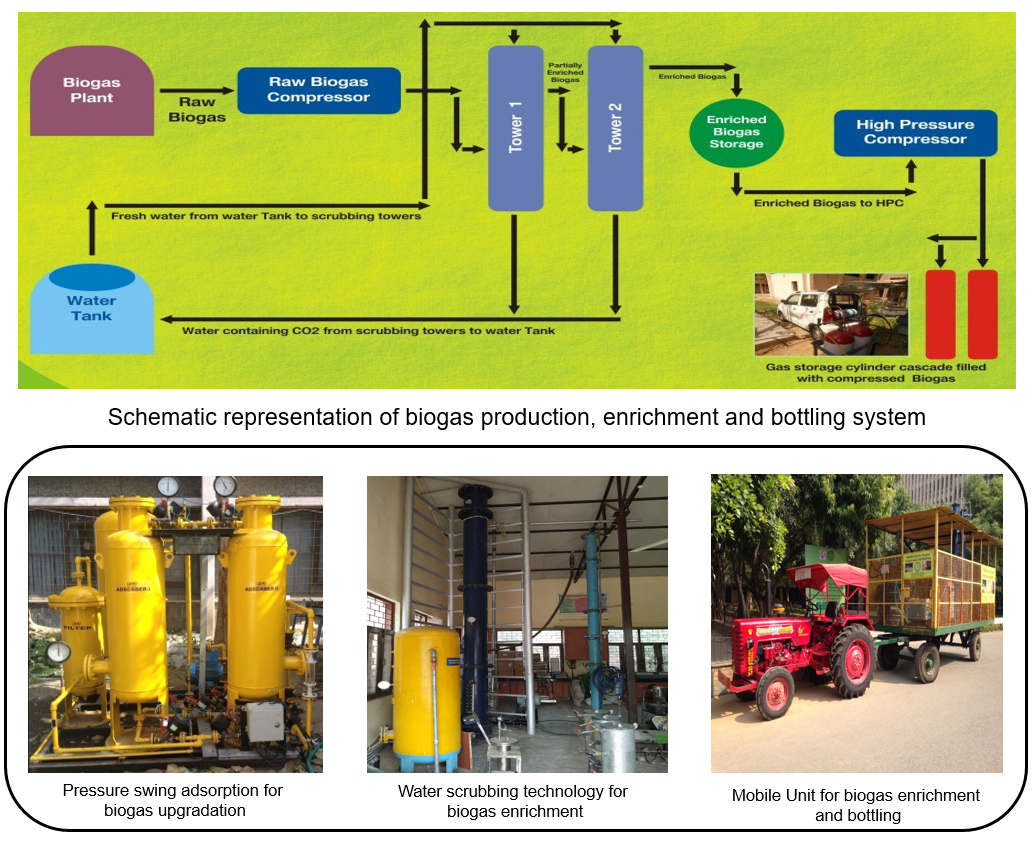
Raw biogas has a calorific value of approximately 20 MJ/m³ due to the presence of CO2. Upgraded biogas achieves approximately 32 MJ/m³ depending on methane content. IIT Delhi has developed low cost small scale water scrubbing systems for biogas upgradation with methane purity exceeding 95%.
CO2 Separation
Water scrubbing technology is used for biomethane production and bioCO2 separation. The recovered bioCO2 is utilized for greenhouse crop production, grain fumigation and dry ice formation.
Biomethane Bottling
A fully equipped bottling system is operational at IIT Delhi. Adsorption based storage cylinders using low pressure for higher gas capacity are also under development for various applications.
Other Research Interests
Renewable Energy Sources
Bio Energy Applications for Rural Areas
Cow-dung and Urine Based Products (Panchagavya)
Sustainable Development and Environment
Animal Power
Rural Industrialization
Waste Management Systems
Biomass Gasification
⚡
Compressed Biogas (CBG)- The Future of Green Fuel
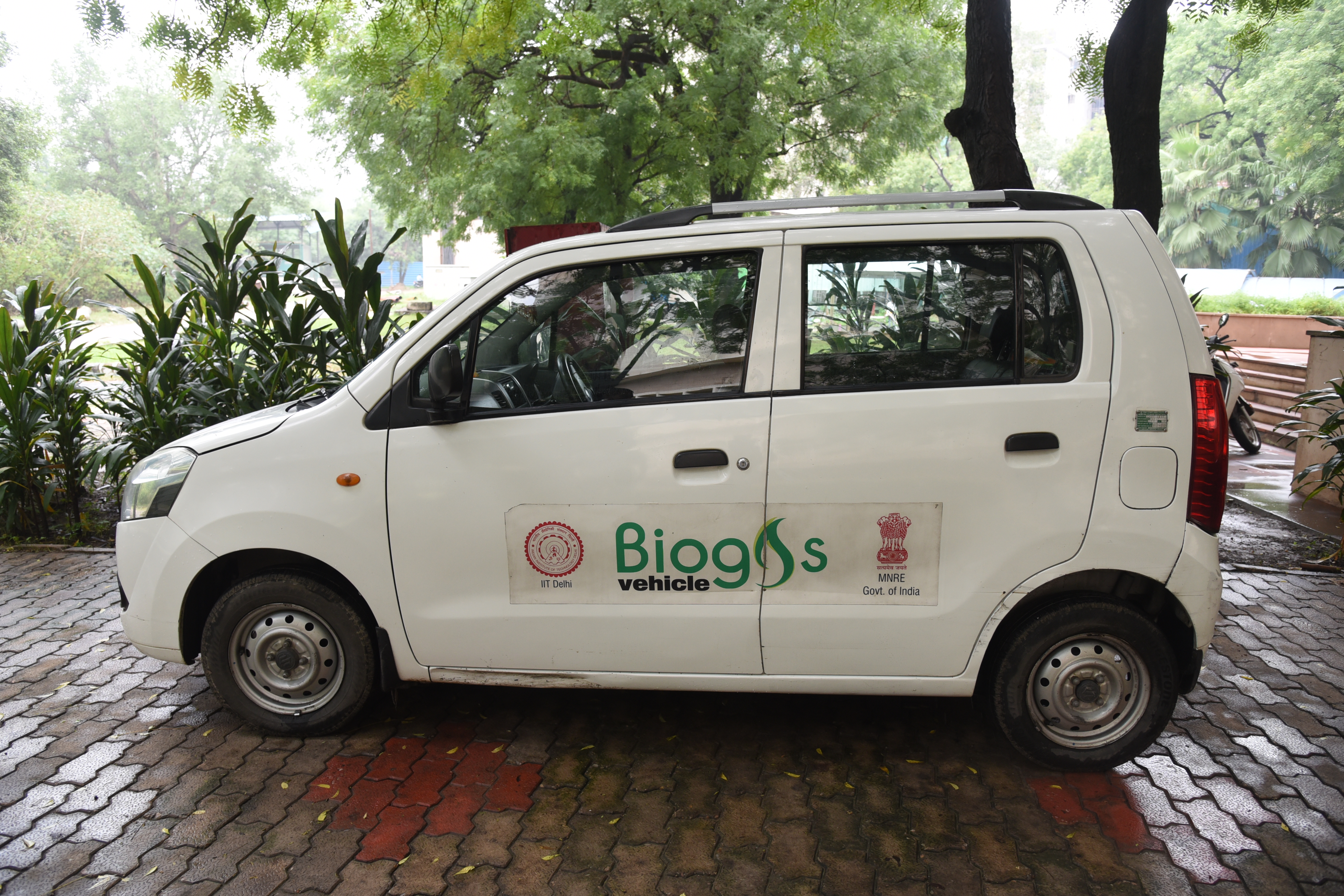
CBG is purified and compressed biogas equivalent to Compressed Natural Gas (CNG) in composition and energy potential. IIT Delhi has been at the forefront of CBG research, technology development and policy formulation in India, including operating the country's first biogas-powered car for over 15 years and covering more than 1,50,000 km.
1,50,000+
km driven on CBG by India's first biogas car at IIT Delhi
95%+
Methane purity achieved by IIT Delhi water scrubbing system
IS:16087
BIS biomethane standard formulated based on IIT Delhi data (2013)
CBG Technology & Development
Small Scale CBG Production
IIT Delhi has pioneered the development of low cost, small scale biogas upgradation technology for CBG production. The technology uses water scrubbing and pressure swing adsorption to remove CO2 and other impurities from raw biogas, producing vehicle-grade biomethane.
Water Scrubbing Technology
The most sustainable and eco-friendly upgradation method developed at IIT Delhi achieves methane purity of more than 95%. The system is designed for small scale deployments including gaushalas, farms and rural cooperatives.
CBG as Vehicle Fuel
CBG has properties equivalent to CNG and can be used directly in CNG vehicles. IIT Delhi has demonstrated this through 15+ years of continuous operation of India's first biogas car, which formed the scientific basis for BIS standard IS:16087 (2013).
bioCO2 Recovery
The CO2 separated during upgradation is recovered as bioCO2 for use in greenhouses, grain fumigation and dry ice production, making the process economically circular.
Gaushala-Based CBG Model
Gaushala CBG Model Flagship Initiative
India has over 5,000 registered gaushalas (cow shelters) housing millions of cattle. These gaushalas generate large quantities of cattle dung daily, making them ideal feedstock sources for decentralised CBG production. IIT Delhi has developed and promoted a dedicated Gaushala-Based CBG Model that transforms gaushalas from economic liabilities into self-sustaining green energy hubs.
How the Model Works
Cattle dung from the gaushala is fed into a biogas digester. The raw biogas produced is then upgraded using the IIT Delhi water scrubbing system to produce vehicle-grade CBG. The compressed gas is filled into cylinders for use in vehicles or supplied to nearby CNG stations. The digested slurry (biofertilizer) is sold to farmers, creating an additional revenue stream.
Key Benefits
Converts cattle dung waste into clean CBG fuel
Generates revenue for gaushala through gas and biofertilizer sales
Makes gaushalas financially self-sustaining
Reduces greenhouse gas emissions from open dung disposal
Produces organic biofertilizer improving soil health
Scalable decentralised model replicable across India
Supports rural energy security and Atmanirbhar Bharat goals
Technology licensed to 11 industries and multiple gaushalas
CBG Policy & Standards
Policy Contributions
Prof. Vijay and IIT Delhi have played a pivotal role in shaping India's CBG policy landscape. The performance and emission data generated from operating India's first biogas car directly informed the formulation of the Bureau of Indian Standards biomethane specification IS:16087 in 2013.
SATAT Scheme
IIT Delhi's research and advocacy has supported the government's Sustainable Alternative Towards Affordable Transportation (SATAT) initiative, which aims to set up 5,000 CBG production plants across India by 2024 with a production target of 15 million tonnes per annum.
Maruti Suzuki & Industry Recognition
Maruti Suzuki Chairman R C Bhargava has publicly stated that biogas-powered vehicles should receive greater government incentives than hybrids due to their net-zero carbon emissions potential, highlighting growing industry recognition of CBG as a priority fuel.