Laser Induced Graphene
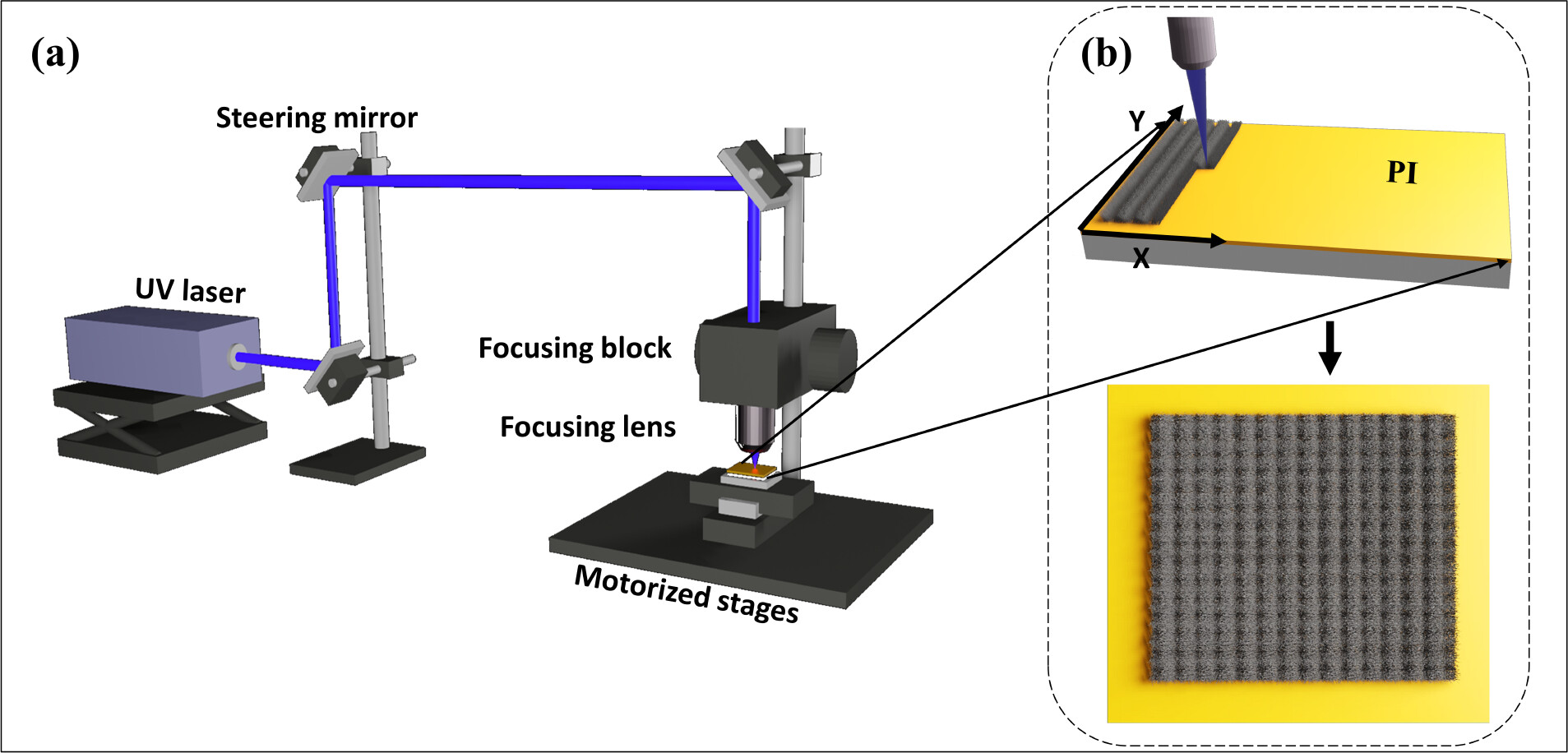
Laser-induced graphene (LIG) is a novel form of graphene created by exposing carbon-rich materials to intense laser pulses. This process involves focusing a high-power laser on materials like polyimide, which is a polymer, resulting in the rapid transformation of its surface into graphene through pyrolysis and the removal of other components. The outcome is a highly conductive, porous, and flexible material that possesses the remarkable properties of graphene, such as high electrical conductivity, thermal stability, and mechanical strength. LIG is attracting significant attention due to its simplicity, cost-effectiveness, and scalability compared to traditional graphene production methods. It has potential applications in energy storage devices like supercapacitors and batteries, sensors, and flexible electronics. Additionally, its ability to be produced from waste materials offers a sustainable approach to developing high-performance materials. The versatility of LIG makes it a promising material for future technological advancements in various fields.
Publications
Devinder, S., Vishwakarma, M. K., Joseph, S., Pandey, S., & Joseph, J. (2023). UV-LIG-based perfect broadband absorber for solar thermoelectric generation. ACS Applied Energy Materials, 6(10), 5616-5627.Devinder, S., Joseph, S., Pandey, S., & Joseph, J. (2023). Low-cost, interdigitated capacitive sensor using laser-written graphene foam for touch, proximity, and liquid level detection. Applied Physics Letters, 123(16).