|
Courses July – November
2026 · Algebra
MTL105 and MTL2005 Main reference: Contemporary
Abstract Algebra (A first course) by Joseph A. Gallian Group
Theory: Equivalence relations and partitions, maximal elements, minimal
elements, least upper bound, greatest lower bound, lattices, with examples. Permutations,
cyclic permutation, transpositions, and the sign of a permutation. Binary
operations, formal definition of group, subgroup, basic examples of groups, symmetric
group (permutation group), matrix group, group of rigid motions of the plane,
and finite group of motions (Dihedral group). Finite group, cyclic group, generators
and relations, cosets and Lagrange's theorem, group homomorphisms, Cayley's
theorem, normal subgroup, quotient group and isomorphism theorems. Group
action, Class equation, Cauchy's theorems, Sylow's theorems, direct products
and structure theorem for finite abelian groups (without proof) and their applications.
Ring Theory: Definition and examples, ring homomorphism, ideals and quotient
rings, Chinese Remainder Theorem, integral domain and quotient field, ring of
Gaussian integers, Unique factorisation domain, Principal ideal domain,
Euclidean domain, Gauss' lemma (statement only), polynomial ring,
irreducibility of
polynomials and Eisenstein's criterion. Field Theory: Fields, extension of a
field, degree of an extension, finite extension, algebraic extension,
Splitting field, Finite
field and their structures. On successful completion
of the course, a student will be able to:
examples, in order to build
a foundational understanding of group structures.
Grading policy: Quizzes and assignements:
30, Midterm: 30, Final: 40. Attendance policy: Attendance is compulsory.
Attendance record will be maintained! The institute rule will be applied. Tutorial 1, Tutorial 2 , Tutorial 3, Tutorial 4 Quiz
1: 4th September (Friday). Note:
Students will be given a chance to make up only one quiz (if he or she misses
it) For MTL105/MTL2005: Audit Pass is 50% January – May 2026 · Mathematical
Theory of Coding (MTL744) Main reference: Coding Theory – A First Course
by Xing and Ling. There will be a midterm and a final
test. At least three quizzes are expected. There will be two types of assignments (1) problem solving and
submitting solutions, (2) understanding certain results (theorems, propositions, lemmas, concepts, or
examples) and making a presentation. The final grading will have the
following approximate proportions: Quizzes: 21%,
Assignments: 15%, Midterm: 24%, Major (final): 40%. Audit pass: minimum 60% marks. Quizzes are expected on: 20th
-24th Jan, 10th -14th
Feb, 17th -21th
March, 10th -12th April. Midterm: 21st Feb-27th Feb. Class room:
LH413.4, Time: 5 - 6:30 (Monday and Thursday). Courses Jan-May
2025 · MTL
101 (Linear Algebra and Differential
Equations) See the course information sheet here. PDF of lectures 1 to 5, 6, 7&8, 9&10, 11&12, 13&14, 15 &
16, 17 &
18. Tutorial
1, Tutorial
2, Tutorial
3, Tutorial
4, Tutorial
5, Tutorial
6. Solution of every question of
the tutorial sheet is not provided. However, the following questions with
answers may be useful for the students to understand the concepts and the methods and to
solve the problems in the tutorial sheet. Students are advised to understand
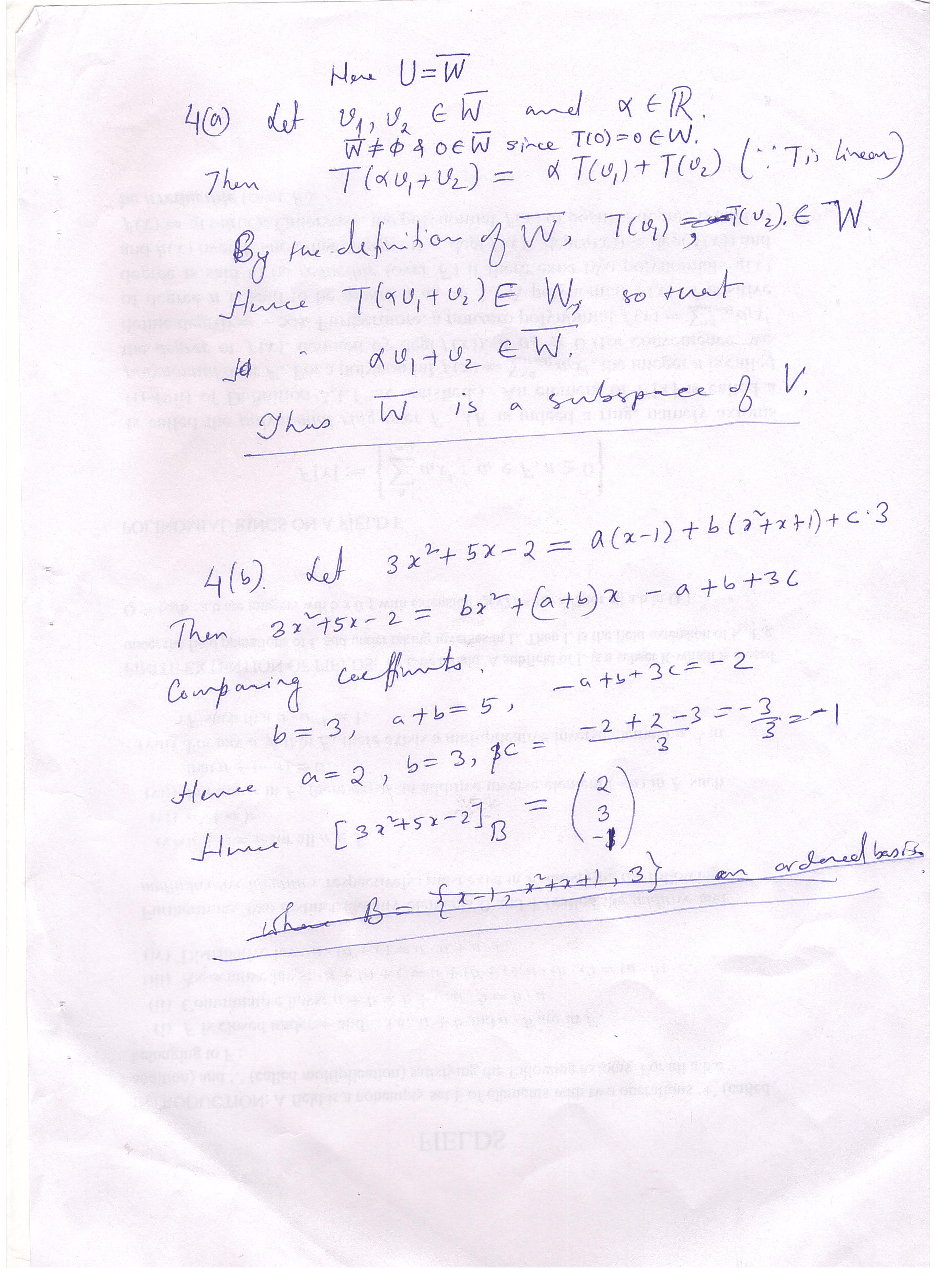
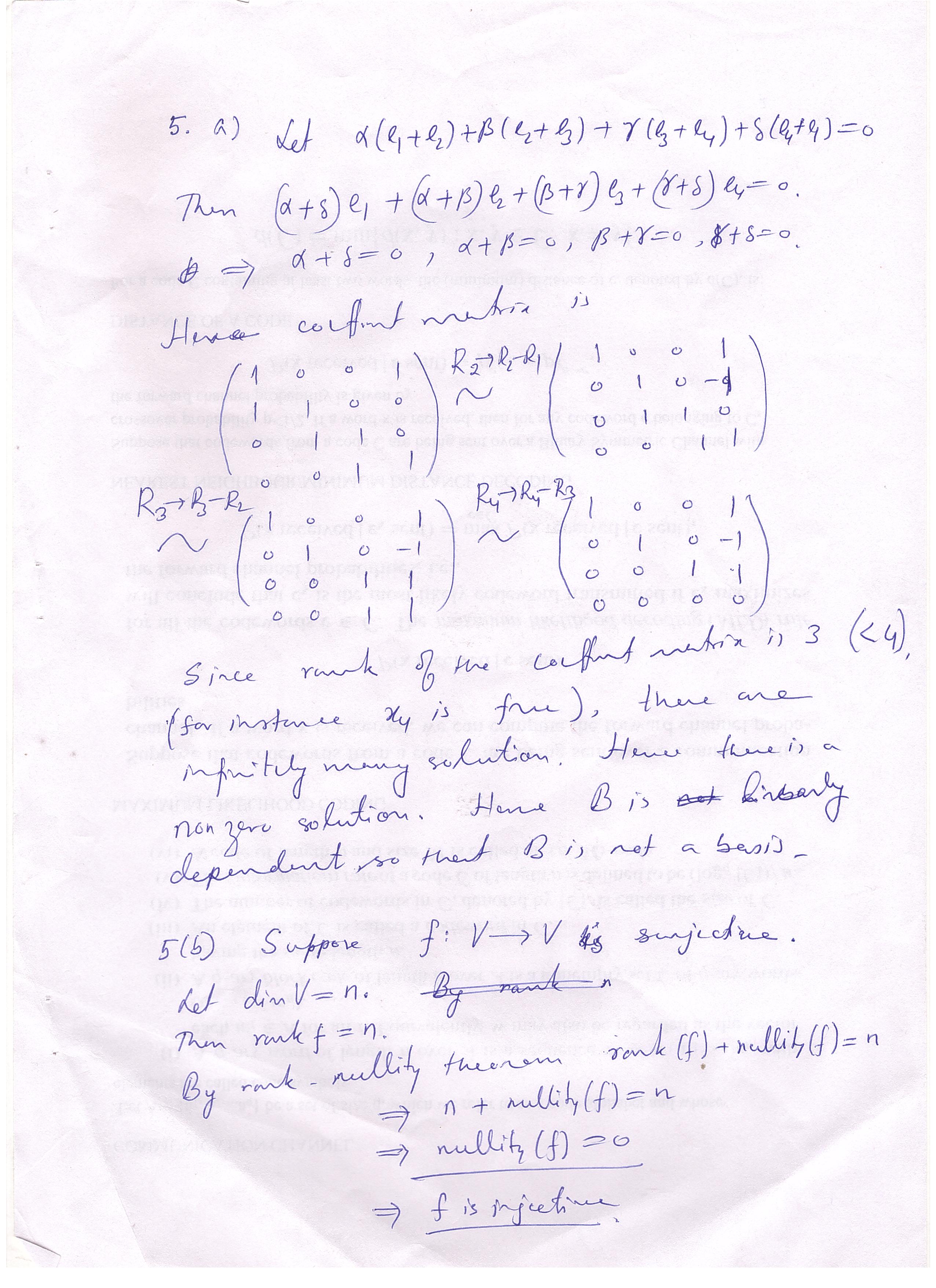
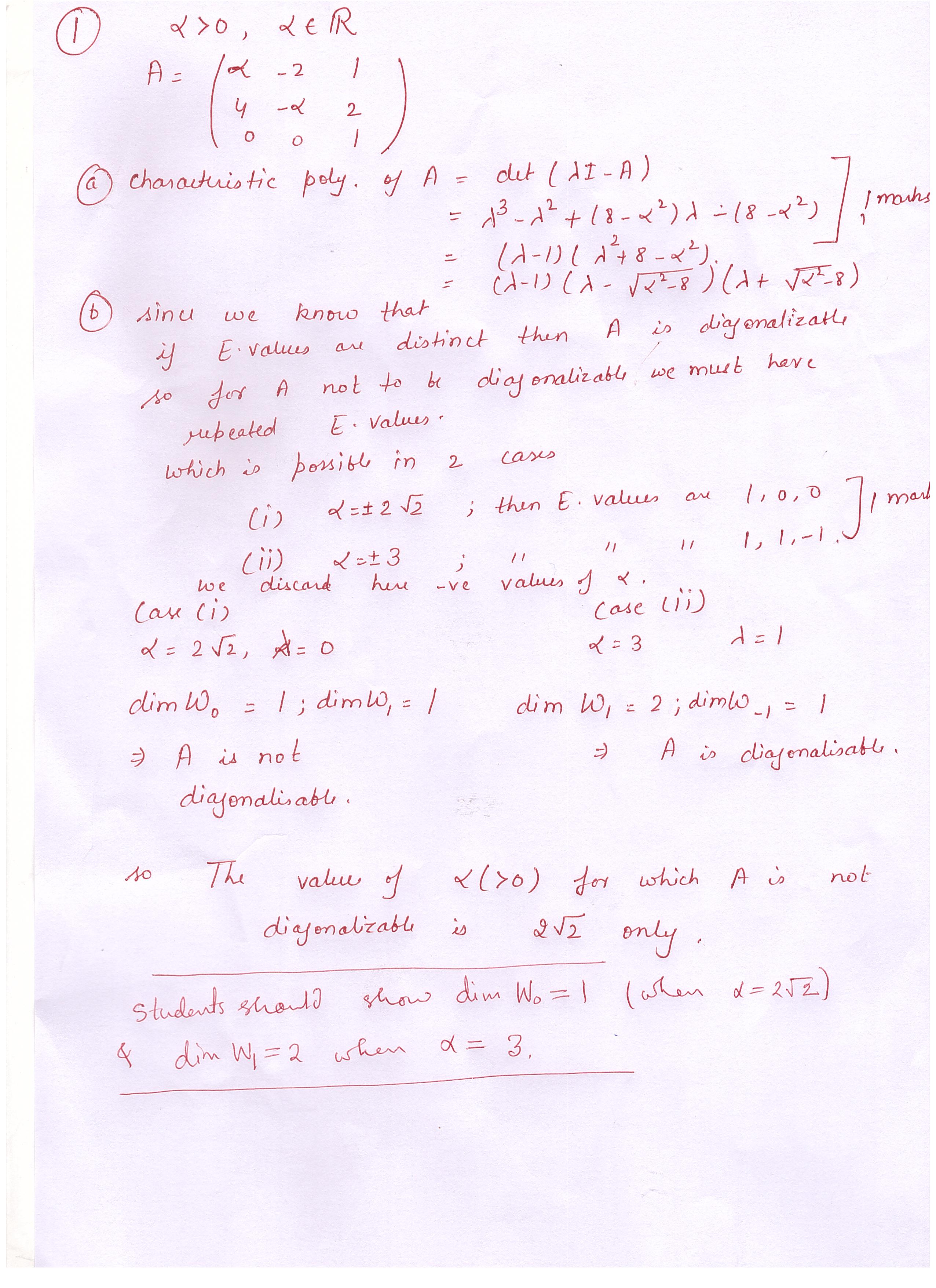
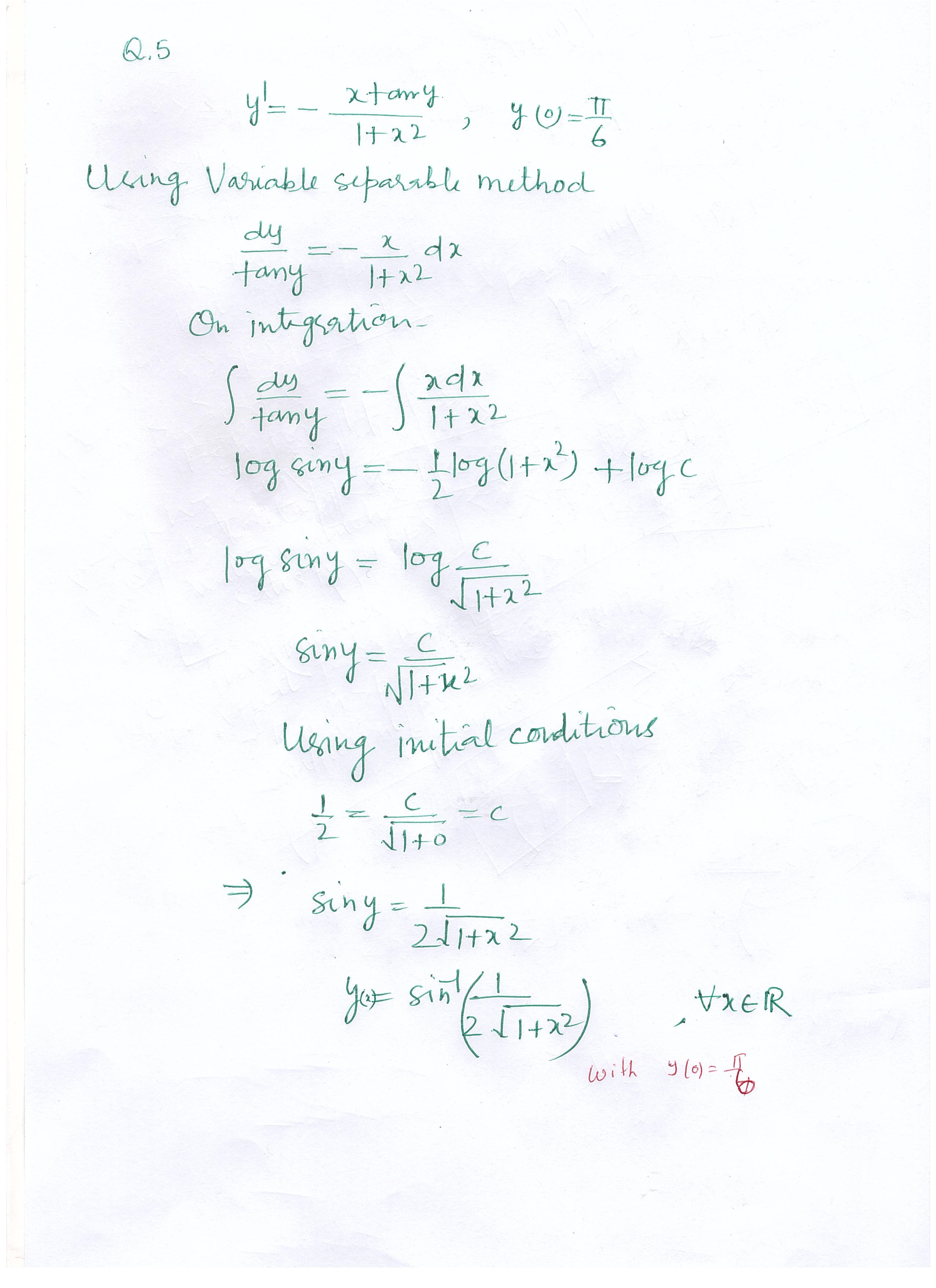
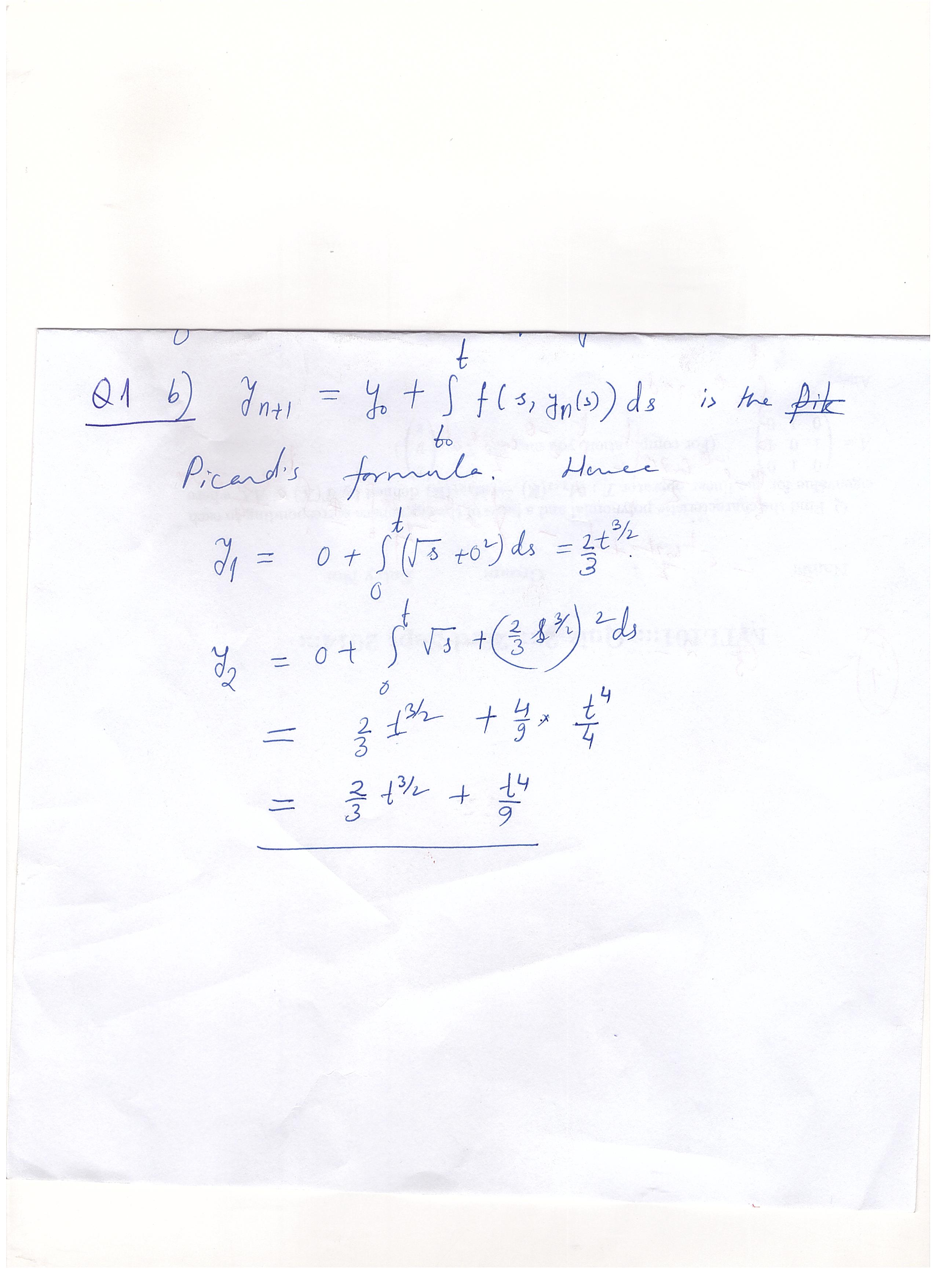
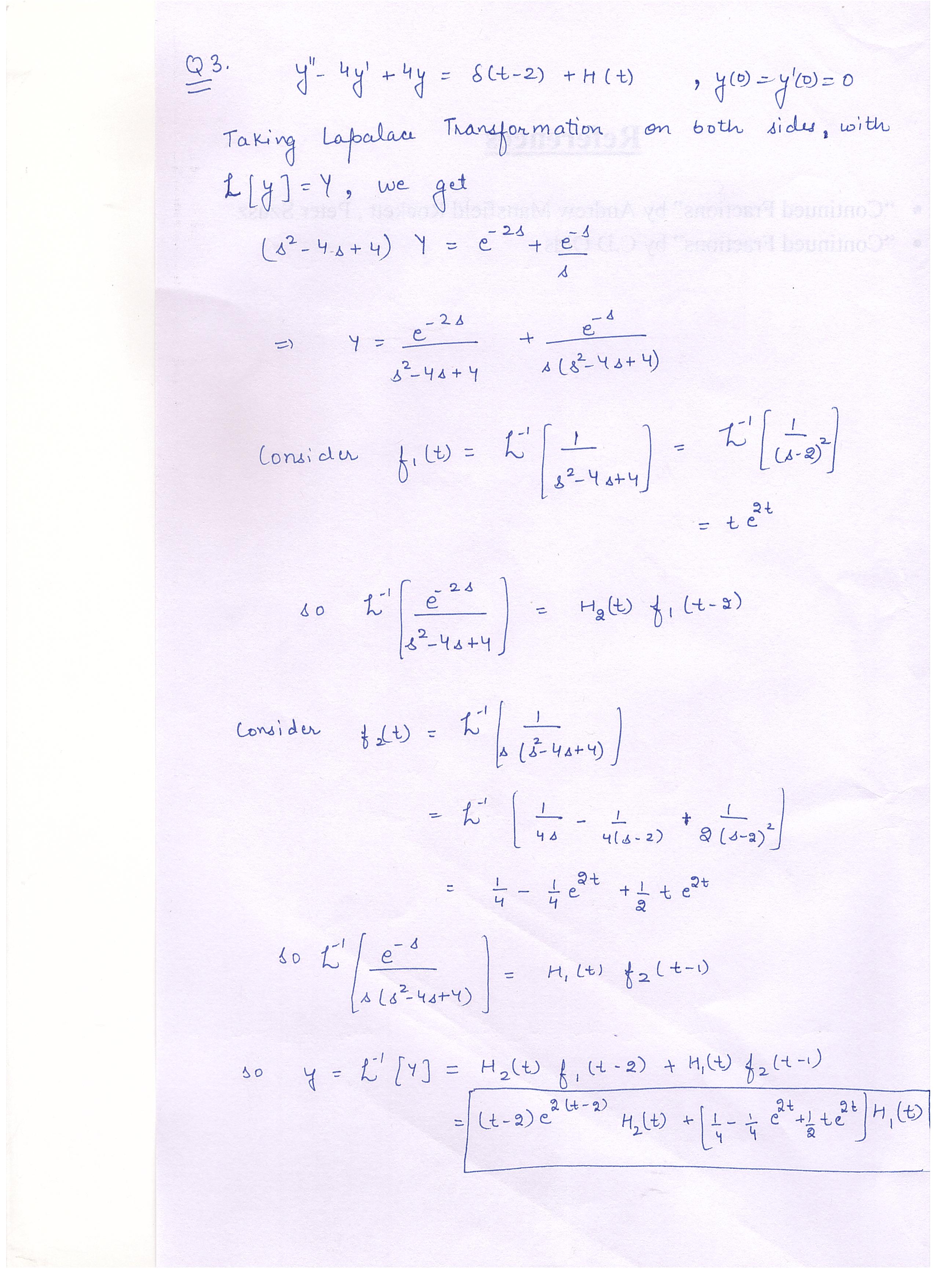
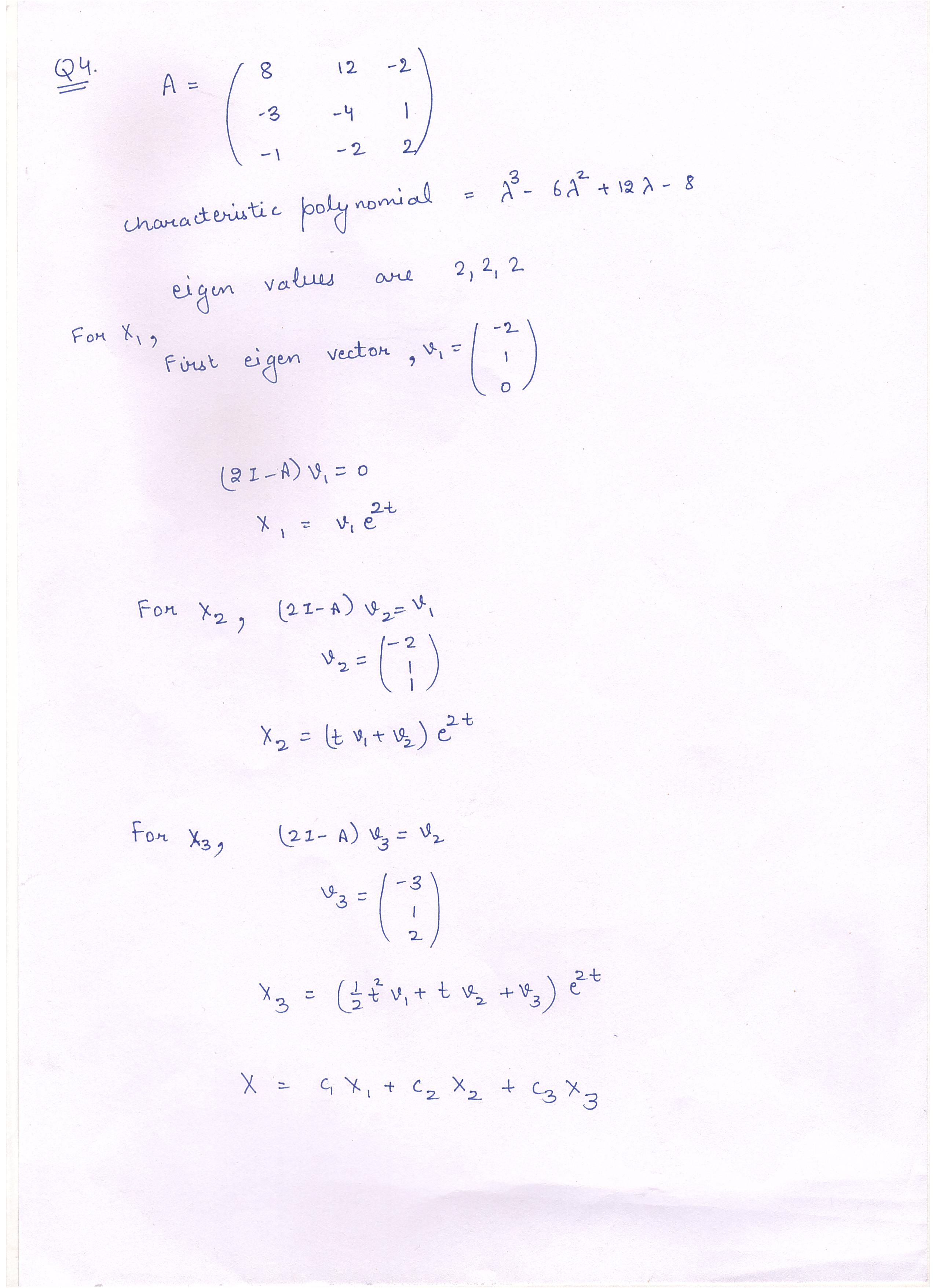
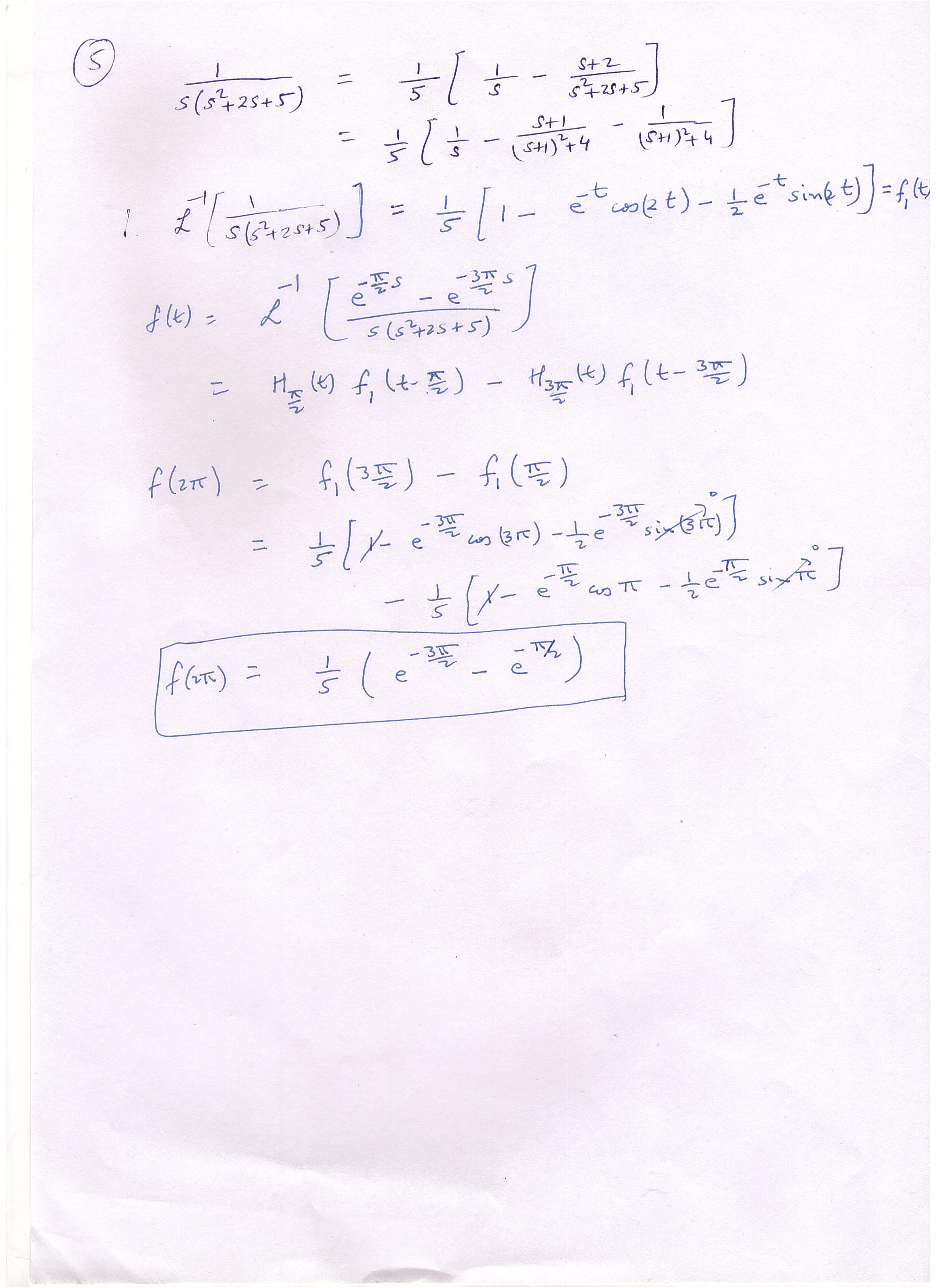
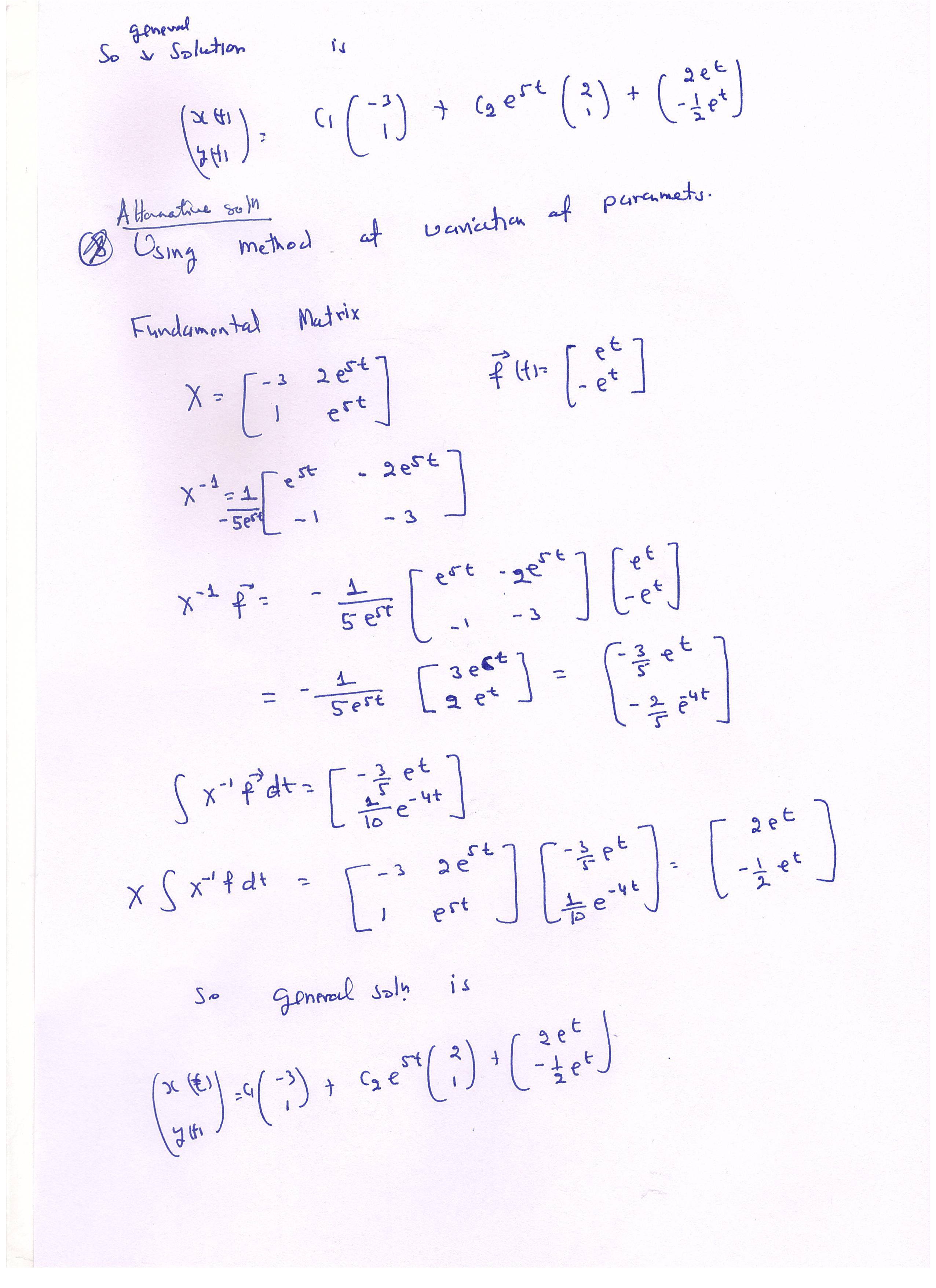
the problems solved in the lecture classes too (see the lecture notes provided above): QWA1, QWA2, QWA3, QWA4, QWA5, QWA6, QWA7, QWA8, QWA9, QWA10A,10B, QWA11, QWA12, QWA13, QWA14, QWA15, QWA16, QWA17, QWA18, QWA19, QWA20, QWA21, QWA22, QWA23, QWA 24 (existence-uniqueness, diff eqn). Solution of Minor test 1 (2015): Q1, Q2, Q3, Q4, Q5. Solution of Minor
test 1 (2014): Answer to Q1, Q2, Q3, Q4, Q5. Solution of Minor
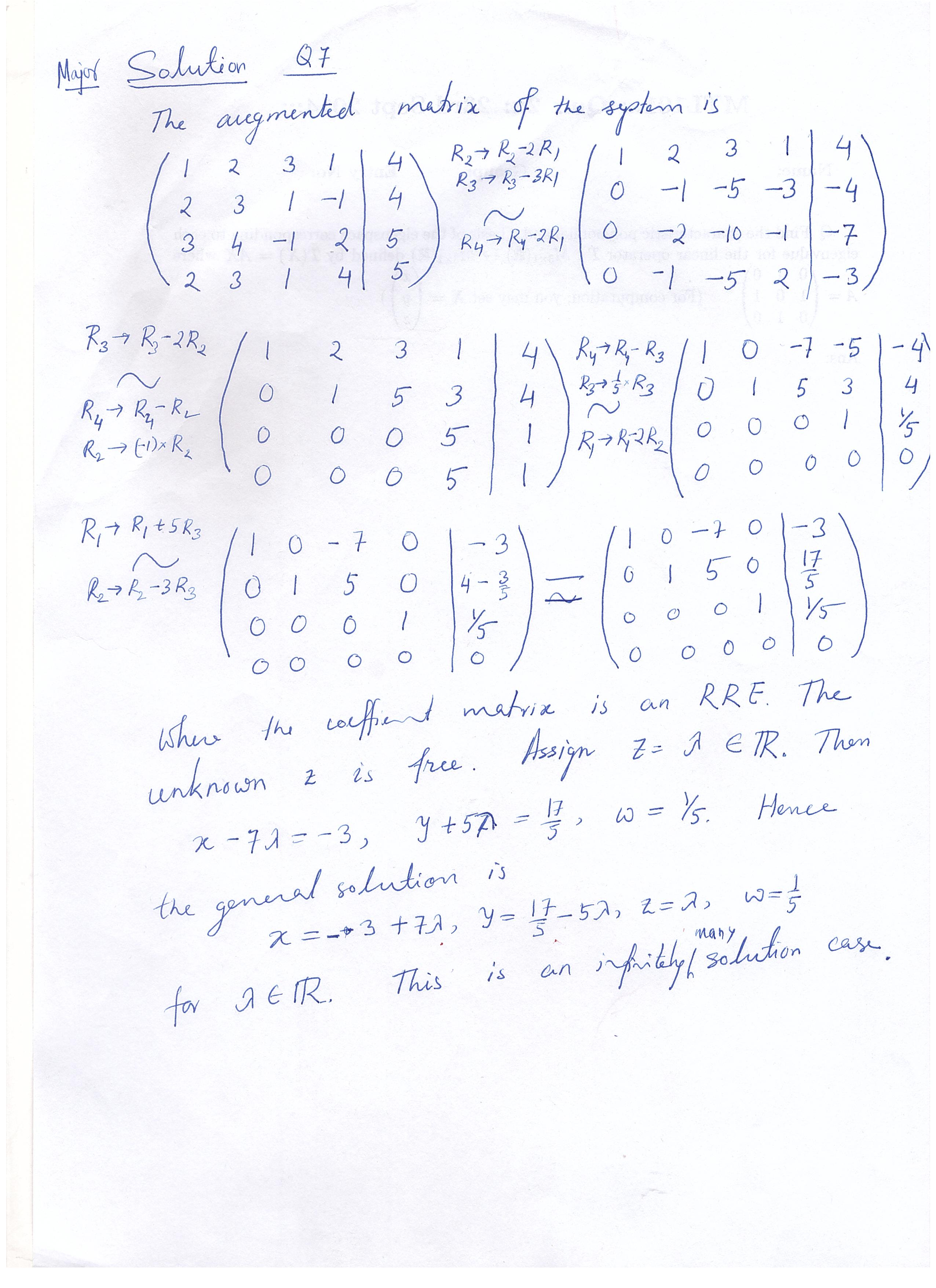
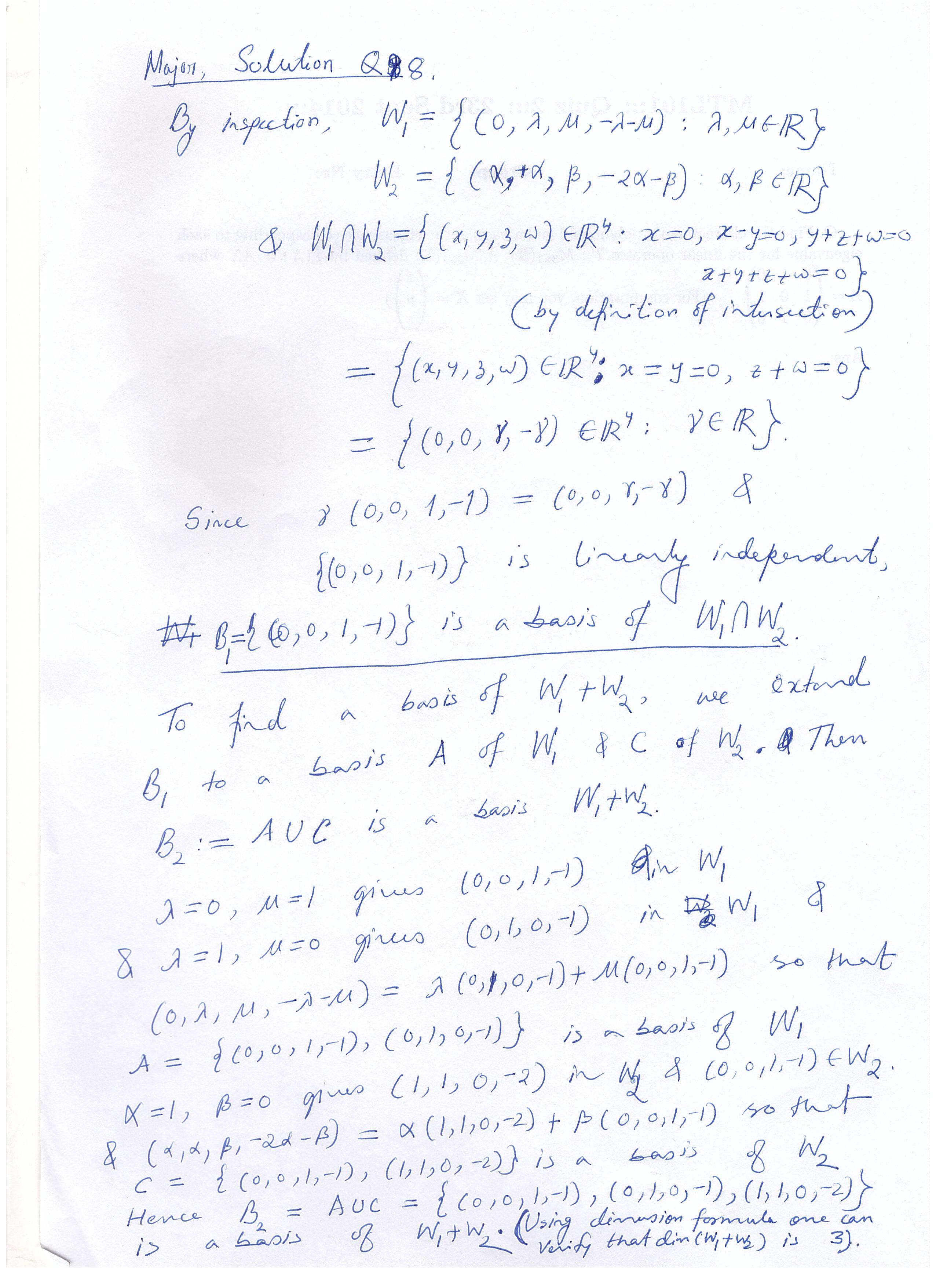
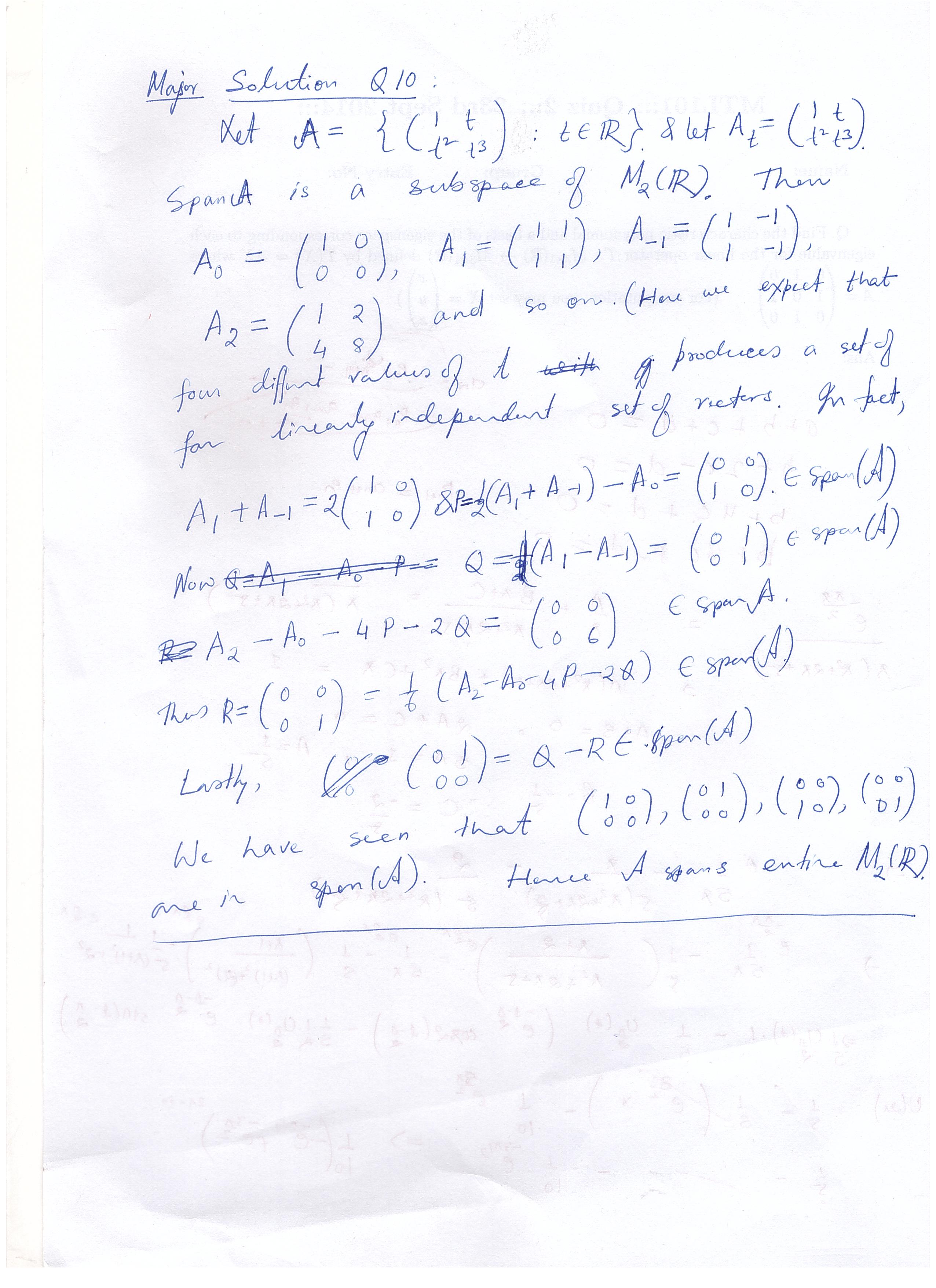
test 2 (2014): Answer to Q1, Q2, Q3, Q4, Q5, Q6. Solution of Major
test (2014): Answer to Q1, Q2, Q3, Q4, Q5, Q6, Q6, Course July –
November 2025: · Cryptography
MTL730 (or MTL7230) office No.- 611R, Department of Mathematics,
Academic Complex West, IIT Delhi). Tutor: Anuj Kumar Bhagat (506, Department of
Mathematics, Academic Complex West, IIT Delhi). Student time: Tuesday, Friday- 6 PM to 7 PM. Lecture time: K slot, i.e., Tuesday-5 PM to 6
PM, Wednesday-12 PM to 1 PM, and Friday-5 PM- 6 PM. Venue: LH 410 Course Evaluation: Best of two quizzes out of 3 quizzes
(10 marks each), Midterm (25 marks), Assignments (five assignments of 3
marks each to be submitted to Gradescope), End-term
(40 marks). The date and the time for a quiz will
be announced in class. One week's time will be given to submit each
assignment. Attendance Policy: 75% is mandatory, including all
medical leaves. Poor attendance may result in a grade down. Reference Books: 1.
An
introduction to mathematical cryptography, Hoffstein, Pipher and
Silverman, Second edition, Springer, 2014. 2.
A
course in number theory and cryptography, Neal Koblitz, Second edition, Springer-Verlag,
1994. Syllabus: Classical cryptosystems (substitution
ciphers, Vigenère ciphers, matrix ciphers, transposition ciphers, ADFGX
cipher, ADFGVX cipher, permutation cipher, Playfair cipher and Enigma machine
cipher) and their cryptanalysis. Preview from number theory, Congruences and
residue class rings, quadratic residue, and Legendre symbol. Public Key
Cryptosystems of RSA, Rabin, etc., their security and cryptanalysis.
Primality tests (Fermat PT, Miller-Rabin PT, AKS PT), factorization and
quadratic sieve, efficiency of other factoring algorithms (Fermat’s,
Pollard’s (𝑝 − 1), Monte Carlo factorization,
Factor base, quadratic sieve, and continued fraction). Finite fields:
Construction and examples, polynomials on finite fields and their
factorization/ irreducibility. Key-Exchange protocols: Diffie-Hellman key
exchange, Massey Omura cryptosystems and ElGamal
cryptosystem. Discrete logarithm problems in general and on
finite fields. Algorithms for finding discrete logarithms (Shank Baby step
Giant step algorithm, Pollard’s 𝜌 algorithm, index calculus algorithm in
ℤ𝑝 and Pohlig-Hellman algorithm) and use
them for cryptanalysis. Elliptic curves, public key cryptosystems,
particularly on elliptic curves. Problems of key exchange, discrete
logarithms, and the elliptic curve logarithm problem. Implementation of
elliptic curve cryptosystems. Counting of points on Elliptic Curves over
Galois Fields of order 2𝑚. Cryptographic
hash functions. Authentication, Digital Signatures, Identification,
certification infrastructure and other applied aspects. DES- security and
generalizations. Applying the corresponding algorithm
programs. (Laboratory/ design activities could also be included). Courses Jan-May
2025 · MTL
101 (Linear Algebra and Differential
Equations) See the course information sheet here. PDF of lectures 1 to 5, 6, 7&8, 9&10, 11&12, 13&14, 15 &
16, 17 &
18. Tutorial
1, Tutorial
2, Tutorial
3, Tutorial
4, Tutorial
5, Tutorial
6. Solution of every question of
the tutorial sheet is not provided. However, the following questions with
answers may be useful for the students to understand the concepts and the methods and to
solve the problems in the tutorial sheet. Students are advised to understand
the problems solved in the lecture classes too (see the lecture notes provided above): QWA1, QWA2, QWA3, QWA4, QWA5, QWA6, QWA7, QWA8, QWA9, QWA10A,10B, QWA11, QWA12, QWA13, QWA14, QWA15, QWA16, QWA17, QWA18, QWA19, QWA20, QWA21, QWA22, QWA23, QWA 24 (existence-uniqueness, diff eqn). Solution of Minor test 1 (2015): Q1, Q2, Q3, Q4, Q5. Solution of Minor
test 1 (2014): Answer to Q1, Q2, Q3, Q4, Q5. Solution of Minor
test 2 (2014): Answer to Q1, Q2, Q3, Q4, Q5, Q6. Solution of Major
test (2014): Answer to Q1, Q2, Q3, Q4, Q5, Q6, Q6, · Mathematical
Theory of Coding (MTL744) Main reference: Coding Theory – A First Course
by Xing and Ling. There will be a midterm and a final
test. At least three quizzes are expected. There will be two types of assignments (1) problem solving and
submitting solutions, (2) understanding certain results (theorems, propositions, lemmas, concepts, or
examples) and making a presentation. The final grading will have the
following approximate proportions: Quizzes: 21%,
Assignments: 15%, Midterm: 24%, Major (final): 40%. Audit pass: minimum 60% marks. Quizzes are expected on: 20th
-24th Jan, 10th -14th
Feb, 17th -21th
March, 10th -12th April. Midterm: 21st Feb-27th Feb. Class room:
LH413.4, Time: 5 - 6:30 (Monday and Thursday). Course July –
November 2024: MTL100 (Calculus
for B.Tech. 1st year). Visit the course page here. Courses Jan-May 2024 · Algebra (MTL105) Main reference: Contemporary Abstract Algebra by
Joseph Gallian There will be a midterm and a final
test. At least three quizzes are expected. There will be assignments that
everyone is expected to submit. The final grading will have the
following approximate proportions: Quizzes: 25%,
Assignments: 5%, Midterm: 30%, Major (final): 40%. For attending 75% or more a bonus of
up to 5 may be awarded (e.g., 5 for attending 95% or more lectures). Anyone
with false attendance may not be awarded any bonus.
Moreover, if the attendance of a student falls below 75%, he/she
may not be allowed to award I grade. For an I grade, a student must have at least 75% attendance and
a valid reason for not able to appear in the major test (e.g., poor medical
condition). Audit pass: minimum 50% marks and not lesser than 50% attendance (as recorded without any proxy) Quizzes are expected on: 17th
-19th Jan, 7th -9th
Feb, 13th -15th March, 10th
-12th April. Major exam with marking scheme. Major exam with marking scheme. |
|
|
|
Courses Taught in IIT
Delhi:
MTL101 (Linear Algebra
and Differential Equations) - A course for all the first
year BTech in IITD MAL 601 Topology
(Point set topology and introduction to Algebraic topology) for MSc. MAL110 (Calculus and
Differential Equations) for UG MAL 120
for BTech first year (second sem).
It consists of Vector Calculus, Complex Analysis and Fouries Series
(2009). MAL111 (Analysis and
ODE) for BTech Computer Science and Electrical Engineering. MAL124 (Algebra and
Matrix Analysis) for BTech Computer Science and Electrical
Engineering. MAL255 (Linear
Algebra, first course) for UG MTL502/MAL503 (Linear
Algebra) for PG MTL509/MAL514 (Complex Analysis) for PG MTL503/MAL516
(algebra) for PG MAL734/755 (Algebraic
Geometry) for PG MAL860 (Advance course
in Linear Algebra) for PhD MAL863
(Algebraic Number Theory) MTL 856 (Lie Algebra) James E. Humphreys, Introduction to Lie Algebras and
Representation Theory. |
|
Courses Taught
outside IIT Delhi: v MA 101 Real Analysis
for the first year BTech in IIT Patna (2008). v MA 102 Linear Algebra
and Ordinary Differential Equations in IIT Guwahati for BTech first
year (2008). v MA 521
Modern Algebra for MSc in IIT Guwahati (2007). Taught short courses in a few workshops including MTTS,
AFS, IST. |